
Introduction
Nigeria stands as the largest automotive market in Sub-Saharan Africa, where the demand for mobility far outpaces local production. For entrepreneurs, the used car (Tokunbo) trading sector remains one of the most resilient and profitable business opportunities available today.
With shifting global dynamics and Nigeria’s evolving economic landscape, more traders are looking toward China as a primary sourcing hub. In this guide, we break down the essential steps to launching a successful car import business in Nigeria in 2026.
Why Nigeria Is the Ideal Market for Car Importers
Several factors continue to fuel the massive demand for imported vehicles:
Large Vehicle Deficit: Public transportation gaps make private vehicle ownership a necessity.
Affordability: Used vehicles remain the only viable option for Nigeria’s growing middle class.
Sourcing Shifts: While the US and Europe were traditional sources, China’s used car exports are gaining ground due to competitive pricing and modern features.

Step 1: Choose Your Business Model
Before spending a single Dollar or Naira, define your scale:
Retail Trading: Sourcing individual vehicles for end-users. Best for limited capital.
Wholesale Trading: Sourcing multiple units to supply local dealer networks in hubs like Lagos, Abuja, or Kano.
Specialized Niche: Focusing exclusively on high-demand segments like SUVs, taxi-spec sedans, or commercial buses.
Step 2: Select High-Demand Models
Profitability in Nigeria is driven by resale value and maintenance ease. * The “Safety” Category: Toyota sedans (Corolla/Camry) remain the gold standard for liquidity.
The “Growth” Category: Chinese SUVs like Jetour X70 and Geely Coolray are exploding in popularity due to their “luxury look” at a fraction of the cost.
Utility: Pickup trucks and small buses for the logistics sector.
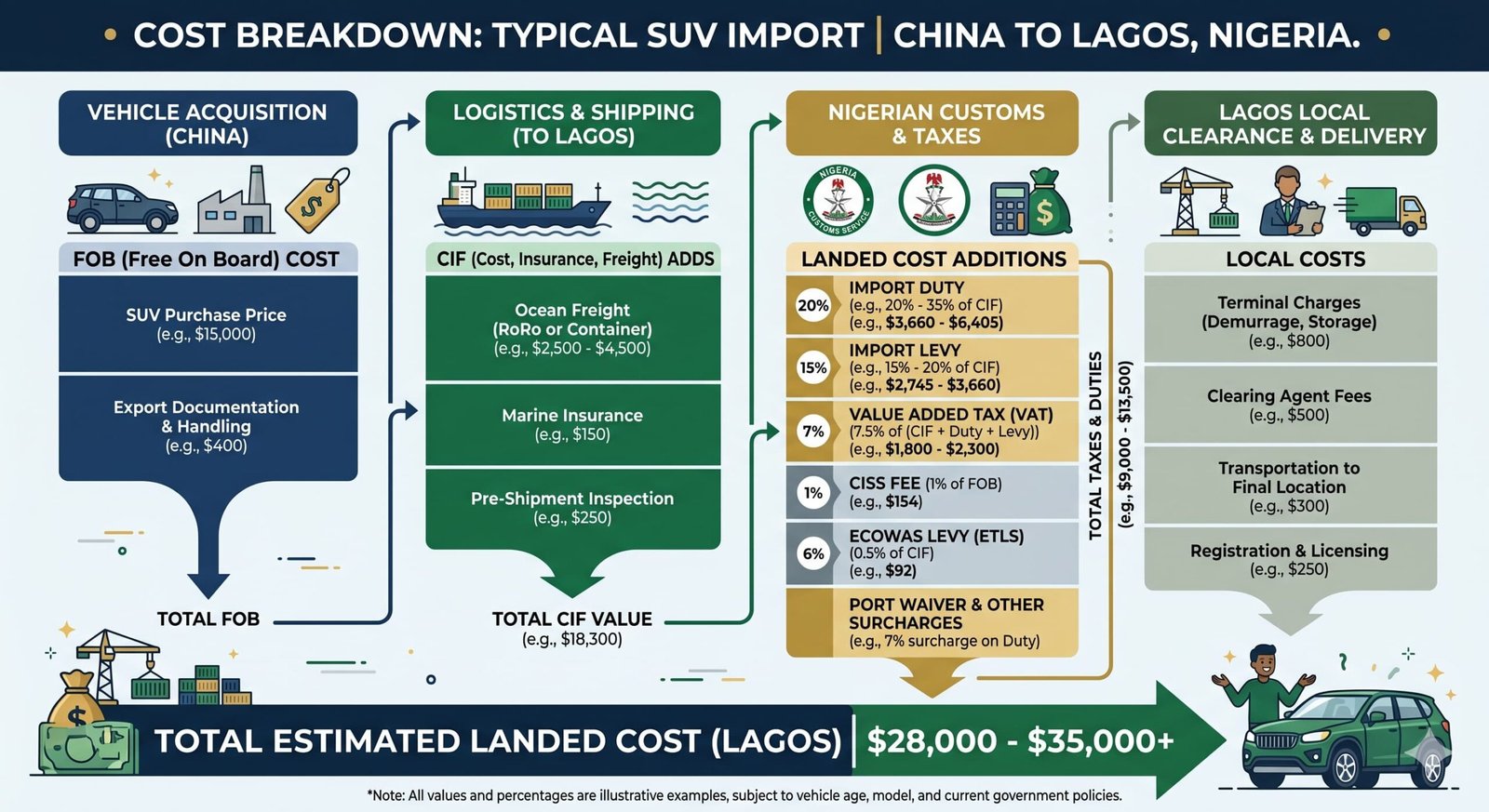
Step 3: Understand the Landed Cost Calculation
Your profit isn’t determined by the purchase price, but by the total landed cost. According to Nigeria Customs Service (NCS) guidelines, you must factor in:
Purchase Price (FOB): The cost of the car at the port in China.
Ocean Freight: The cost to ship to Lagos (Tin Can or Apapa).
Clearing & Duties: Import taxes, which vary based on the vehicle’s age and engine size.
Local Logistics: Transport from the port to your showroom.
Step 4: Master Shipping Efficiency
Shipping one car is expensive. To maximize profit, use 40HQ Container Loading.
A standard 40HQ container can fit 3 SUVs or 4 Sedans.
By maximizing the space, you reduce the “shipping cost per unit,” which directly increases your margin.
Step 5: Secure Reliable Sourcing in China
Success depends on your supplier. In 2026, ensure your Chinese partner:
Holds a valid Auto Export License.
Provides a transparent 30/70 payment structure (Deposit / Balance before loading).
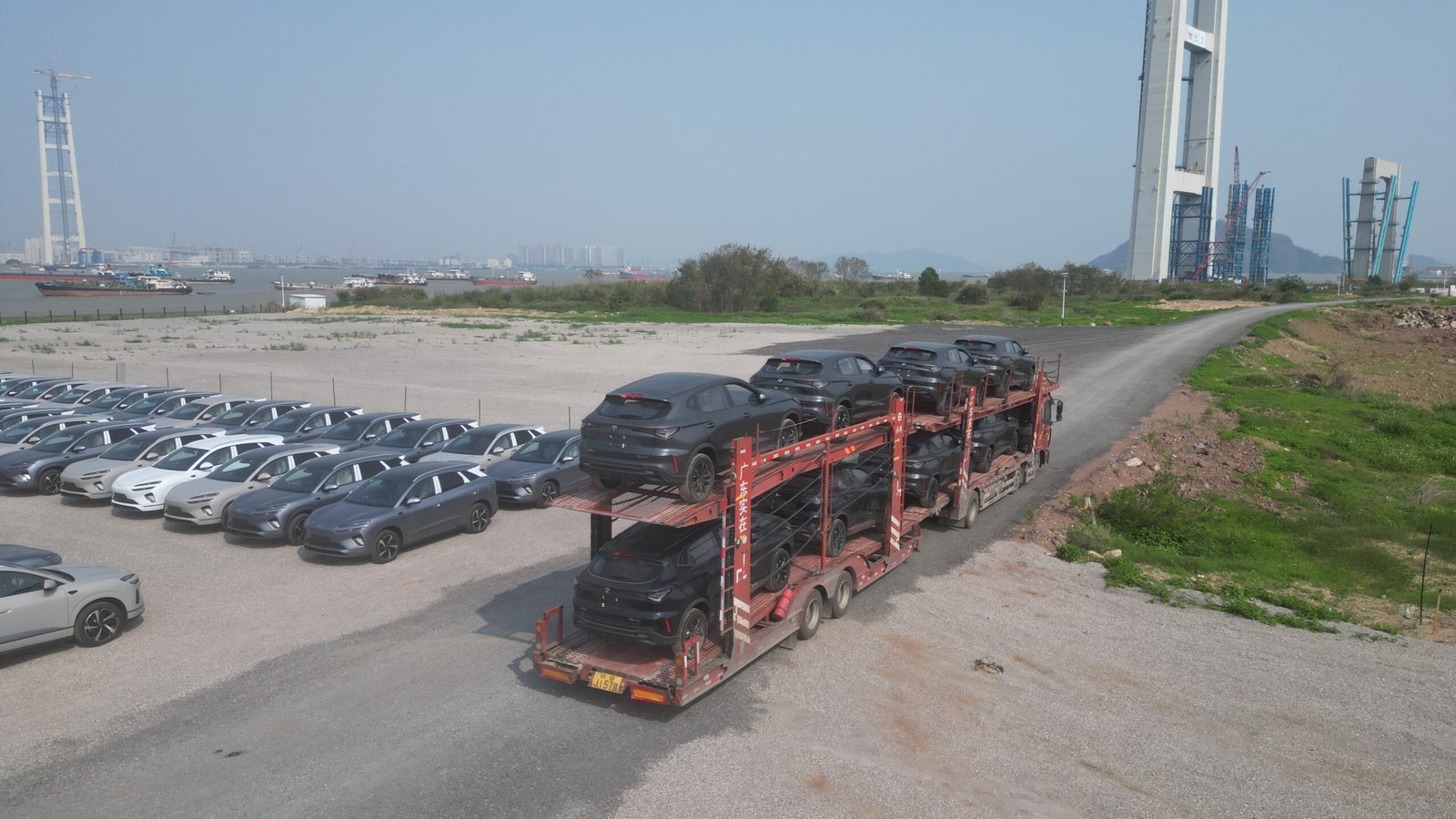
Exports through efficient hubs like Guangzhou Nansha Port, which is a specialized terminal for African automotive routes.
Common Mistakes to Avoid
Buying on Price Alone: A cheap car with high repair costs or no spare parts availability will sit on your lot forever.
Ignoring Documentation: Ensure the VIN, Bill of Lading, and Export Certificates are 100% accurate to avoid heavy fines at Nigerian customs.
Over-scaling: Start with one container (3–4 cars), master the clearing process, and then scale.
Conclusion
Starting a used car import business in Nigeria is a high-reward venture if executed with precision. By combining the reliable demand of the Nigerian market with the cost-effective supply from China, savvy traders can build a scalable and sustainable business.
Contact Riching Auto
Are you ready to start your import journey? We specialize in helping Nigerian entrepreneurs source high-quality vehicles.
Stock: Wide range of New and Used LHD SUVs, Sedans, and Buses.
Logistics: Expert FOB export via Guangzhou Nansha Port.
Support: Transparent pricing and loading advice to maximize your margins.
[Contact us today for a wholesale quotation and our 2026 stock list!]