
The automotive trade between China and Africa has reached a historic turning point in 2026. While used vehicles (often called “Tokunbo” or “Mitumba”) have long dominated the market, the gap between new and pre-owned cars is narrowing.
With the implementation of China’s 180-Day Export Rule in early 2026, the distinction between these two categories has become a mechanical necessity for importers to understand. This guide compares the two options to help you choose the best strategy for your local market.
1. The Used Car Market (180+ Days Old)
Used cars remain the backbone of African imports due to their lower entry price. As of January 1, 2026, a “true used car” is defined as one registered for more than 180 days.
The Price Advantage: Used vehicles allow for smaller initial capital investment and faster inventory turnover in price-sensitive markets like Nigeria and Ghana.
Simplified Logistics: True used cars are unrestricted and do not require manufacturer after-sales certificates, making the export process faster.
Profit Logic: For many traders, the margin on a used Toyota Corolla or Haval H6 is predictable and stable.
2. The New Car Market (0–180 Days Old)
The demand for brand-new Chinese vehicles is surging, particularly in urban centers and more developed markets like the UAE and South Africa.
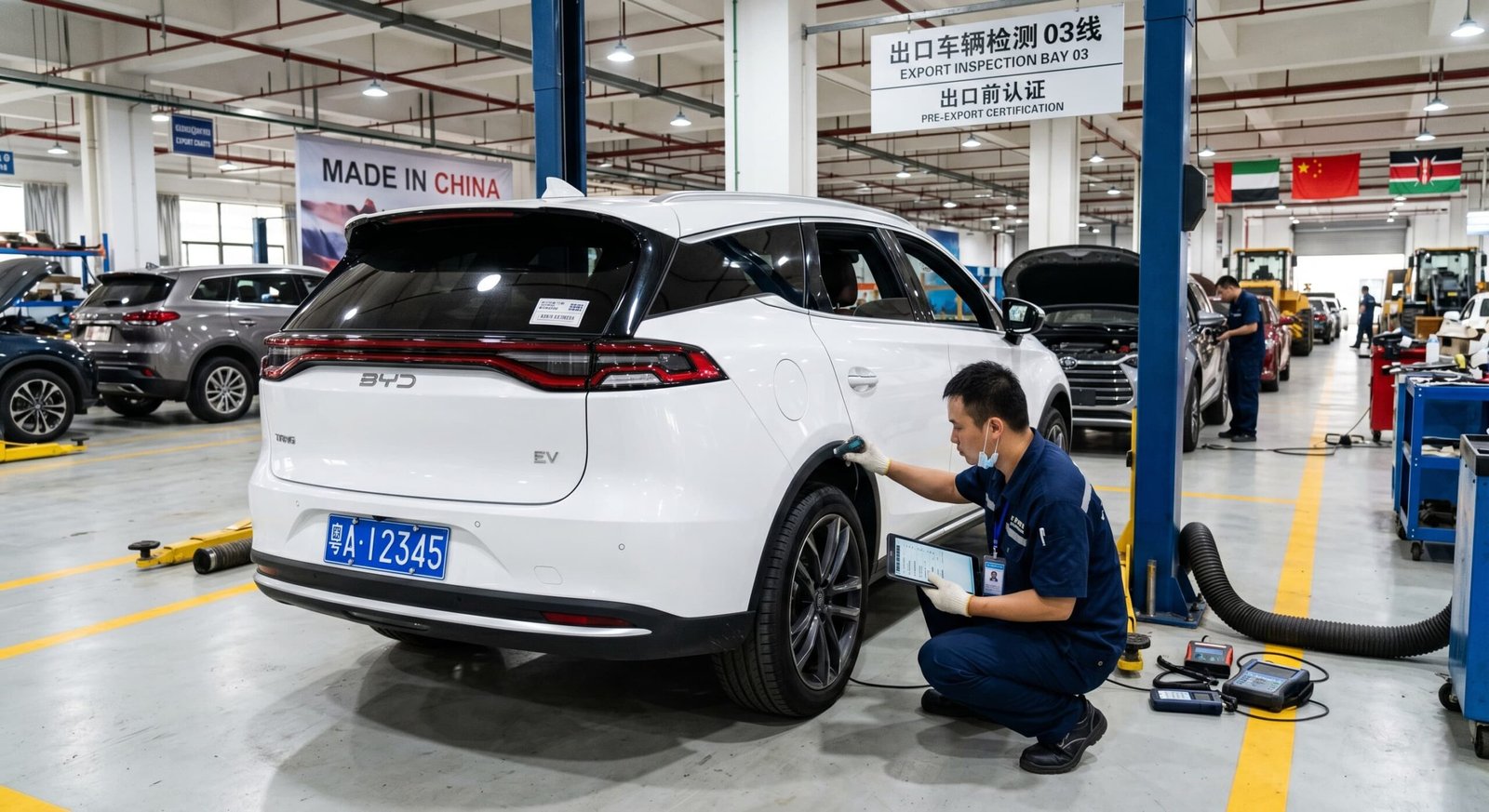
The 180-Day Rule: Starting in 2026, any car registered for less than 180 days is treated with stricter scrutiny. To export these “nearly new” cars, a Manufacturer’s After-Sales Service Confirmation Letter is now mandatory.
Technology & Warranty: New cars come with zero mileage, the latest digital cockpits, and factory warranties—factors that are increasingly attracting middle-class African buyers.
New Energy Vehicles (NEVs): According to Reuters’ 2026 Cleantech reports, exports of Chinese EVs and hybrids to Africa jumped 38% this year, as buyers seek to avoid rising local fuel costs.
Strategic Comparison: Profit vs. Risk
| Feature | Used Cars (180+ Days) | New Cars (0–180 Days) |
| Capital Required | Lower (Best for beginners) | Higher (Best for established dealers) |
| Export Complexity | Low (Streamlined process) | High (Requires manufacturer docs) |
| Target Audience | Budget-conscious / Ride-hailing | Premium / Tech-savvy / Corporate |
| Unit Profit | Stable & Volume-based | Higher potential per unit |
3. Market Demand by Region
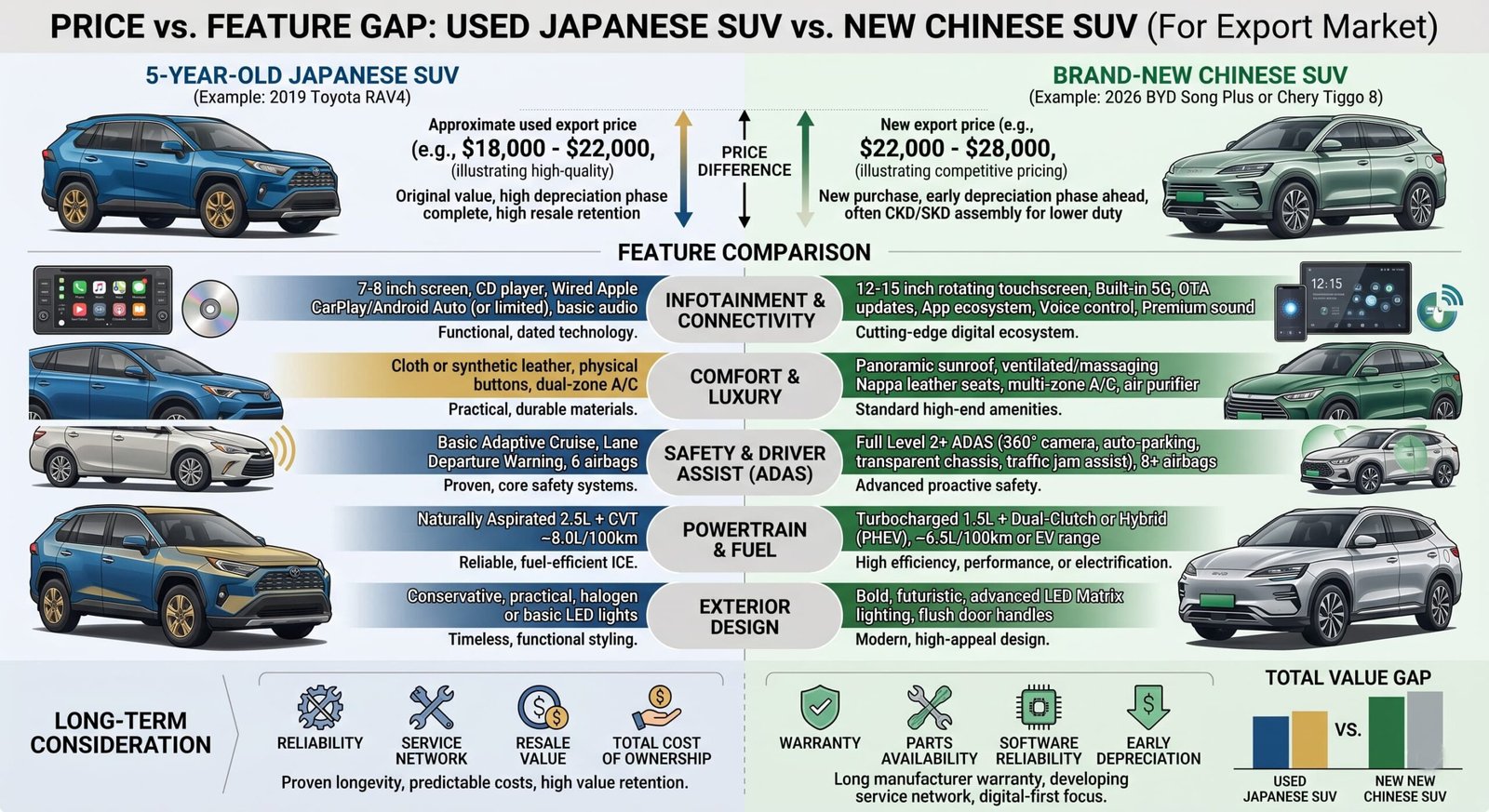
Nigeria & Ghana: Still heavily dominated by used cars (estimated 90% of the market). However, entry-level new Chinese SUVs are now retailing at prices comparable to 6-year-old Japanese imports, creating a new “Affordable New” segment.
South Africa & UAE: These markets show high confidence in new Chinese brands like BYD, Chery, and Geely. In fact, recent data from South Africa shows that brands like Chery have overtaken many traditional rivals in both new and pre-owned categories.
4. The 2026 Strategy: The “Mixed Inventory” Model
The most successful importers in 2026 are no longer choosing one or the other. Instead, they use a 70/30 split:
70% Used Cars: To maintain steady cash flow and serve the mass market.
30% New Cars/EVs: To capture the growing interest in modern technology and position their brand as a forward-thinking dealership.
Conclusion
Whether you choose new or used cars depends on your local buyer’s trust and budget. While used cars offer the lowest risk, new Chinese vehicles represent the future of African mobility. Partnering with a supplier who understands the 2026 export regulations is the first step to ensuring your investment is secure.
Contact Riching Auto
Navigating the new 180-day rules can be complex. We provide:
True Used Cars (180+ Days): Fully inspected and ready for rapid export.
New & Nearly-New Vehicles: Handling all manufacturer documentation and licenses.
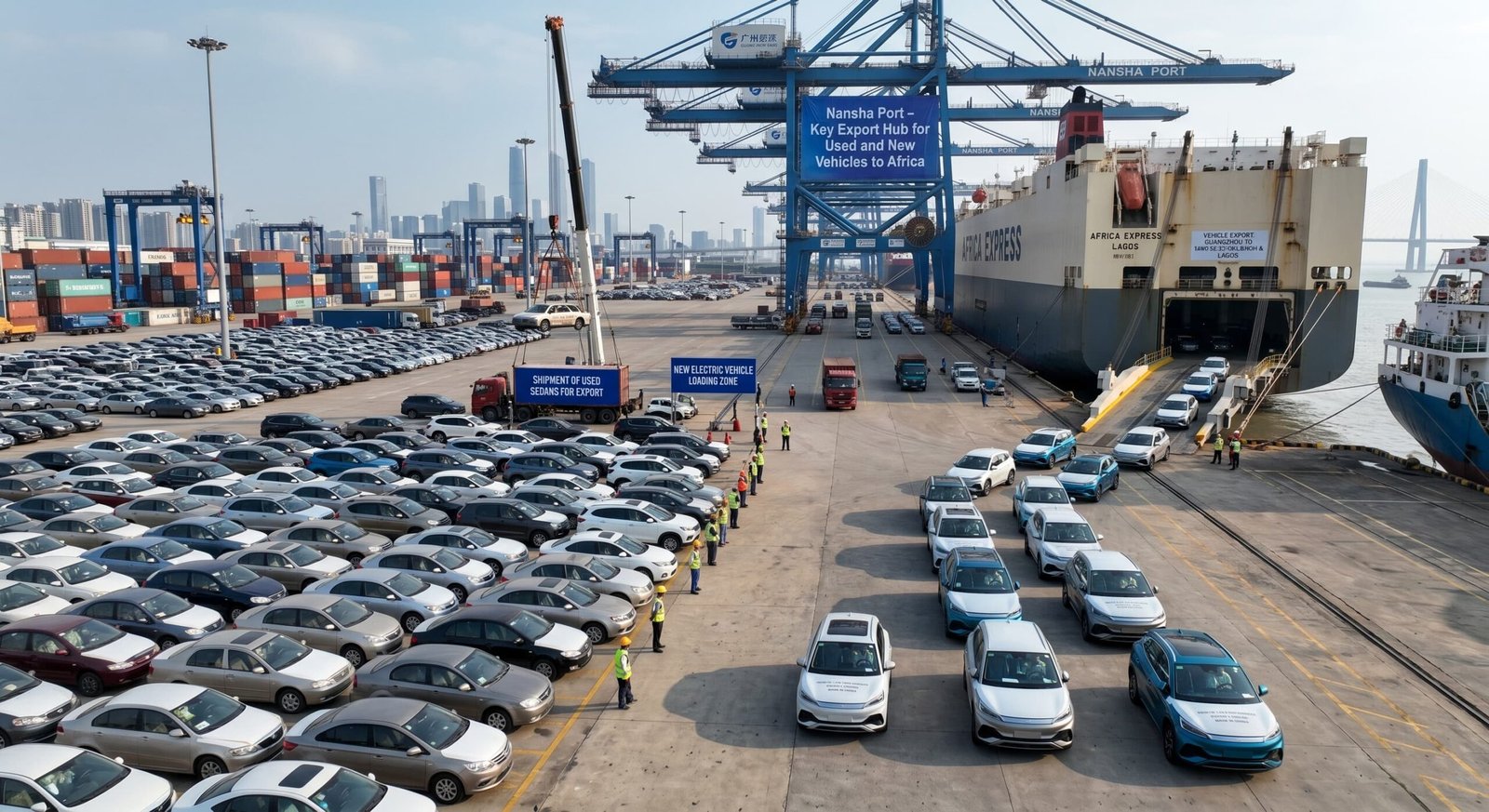
Logistics: Specialized FOB shipments via Guangzhou Nansha Port.
[Contact us today to discuss the best vehicle mix for your market!]