Introduction
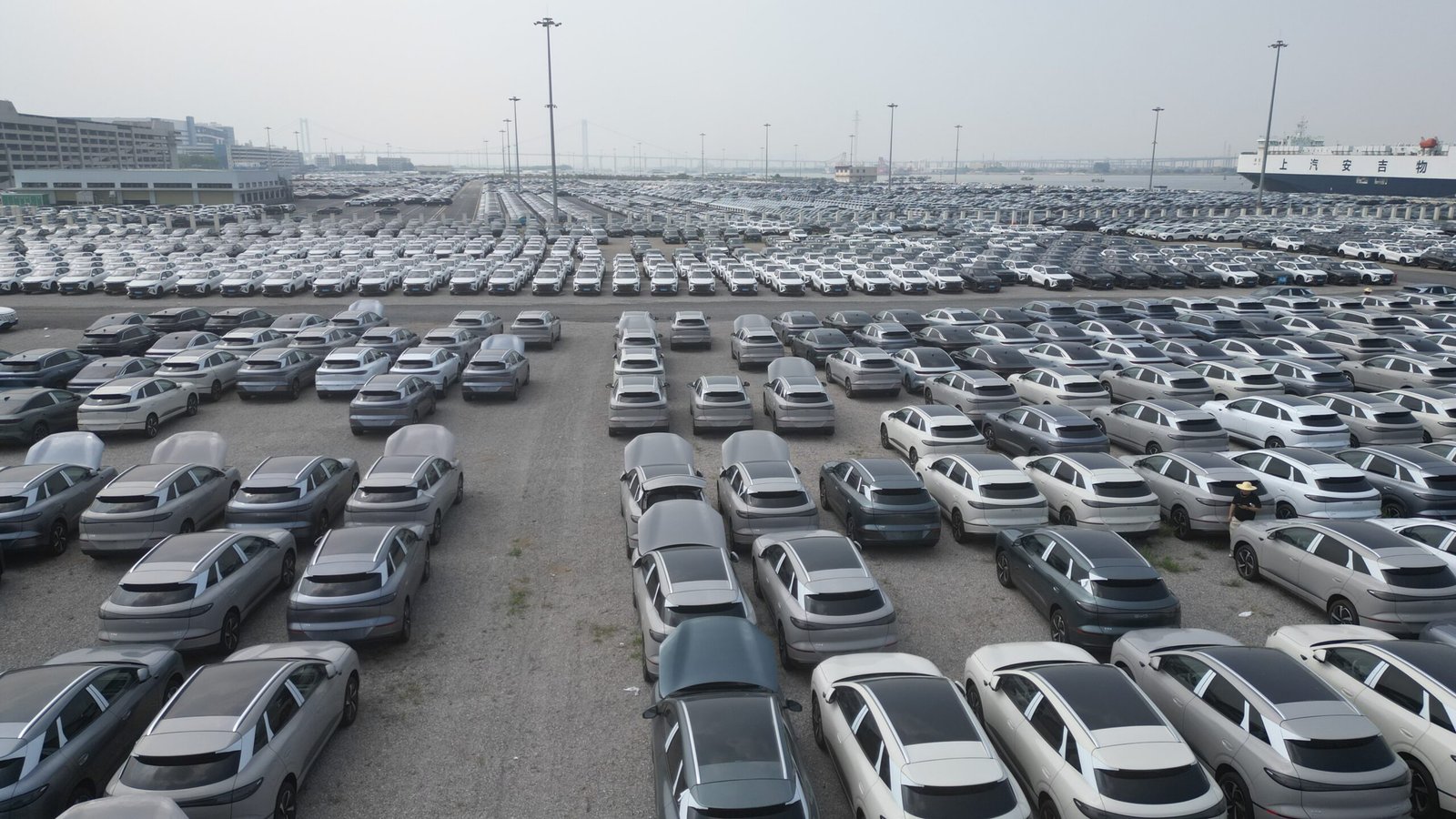
For individual buyers and small-scale traders importing a single car from China, RORO (Roll-on/Roll-off) shipping remains the most popular and cost-effective logistics method. In 2026, as China expands direct shipping routes to Africa, RORO has become even more accessible for those looking to bypass the high costs of private container rentals.
However, while the savings are clear, RORO is not a “one-size-fits-all” solution. Understanding the operational nuances—from transit times at Guangzhou Nansha Port to customs procedures at your destination—is key to a successful import.
What is RORO Shipping?
RORO stands for “Roll-on/Roll-off.” In this method, vehicles are driven directly onto a specialized vessel (similar to a giant floating parking garage) and secured to the internal decks.
Why It’s Cheaper:
No Container Fees: You don’t have to pay for a 20ft or 40ft metal box.
Lower Handling Costs: Without the need for cranes or “stuffing” (loading a car into a container), terminal handling charges are significantly reduced.
Volume Pricing: You only pay for the space your specific vehicle occupies
Key Trade-offs to Consider
1. Shipping Schedules and Predictability
While direct routes from China to Africa are expanding, RORO schedules can still be less frequent than container lines.
Example: A shipment from Guangzhou Nansha Port to Tema Port (Ghana) or Lagos (Nigeria) typically takes between 35 to 45 days.
Variable Factors: Transit times in 2026 can fluctuate based on port congestion and seasonal demand. According to maritime trade reports, new direct corridors are cutting transit times by up to 10 days, but RORO buyers should still allow for a flexible window.
2. Cargo Restrictions
Unlike container shipping, RORO has strict rules:
Running Condition: The vehicle must be in drivable condition (it must start and move under its own power).
No Personal Items: You cannot pack spare parts, luggage, or accessories inside the car. The vehicle must be empty for safety and customs reasons.
Managing Customs and Port Clearance
One of the biggest challenges for individual RORO buyers is that the shipping price usually only covers Port-to-Port transit.
Buyer Responsibility: Once the car reaches your local port (e.g., Tema, Mombasa, or Durban), you are responsible for clearing it through customs.
Local Agents: We highly recommend hiring a local clearing agent in advance to handle the import duty payments and port procedures, as local storage fees (demurrage) can accumulate quickly if the car isn’t cleared within a few days.
RORO vs. Container: Which Should You Choose?
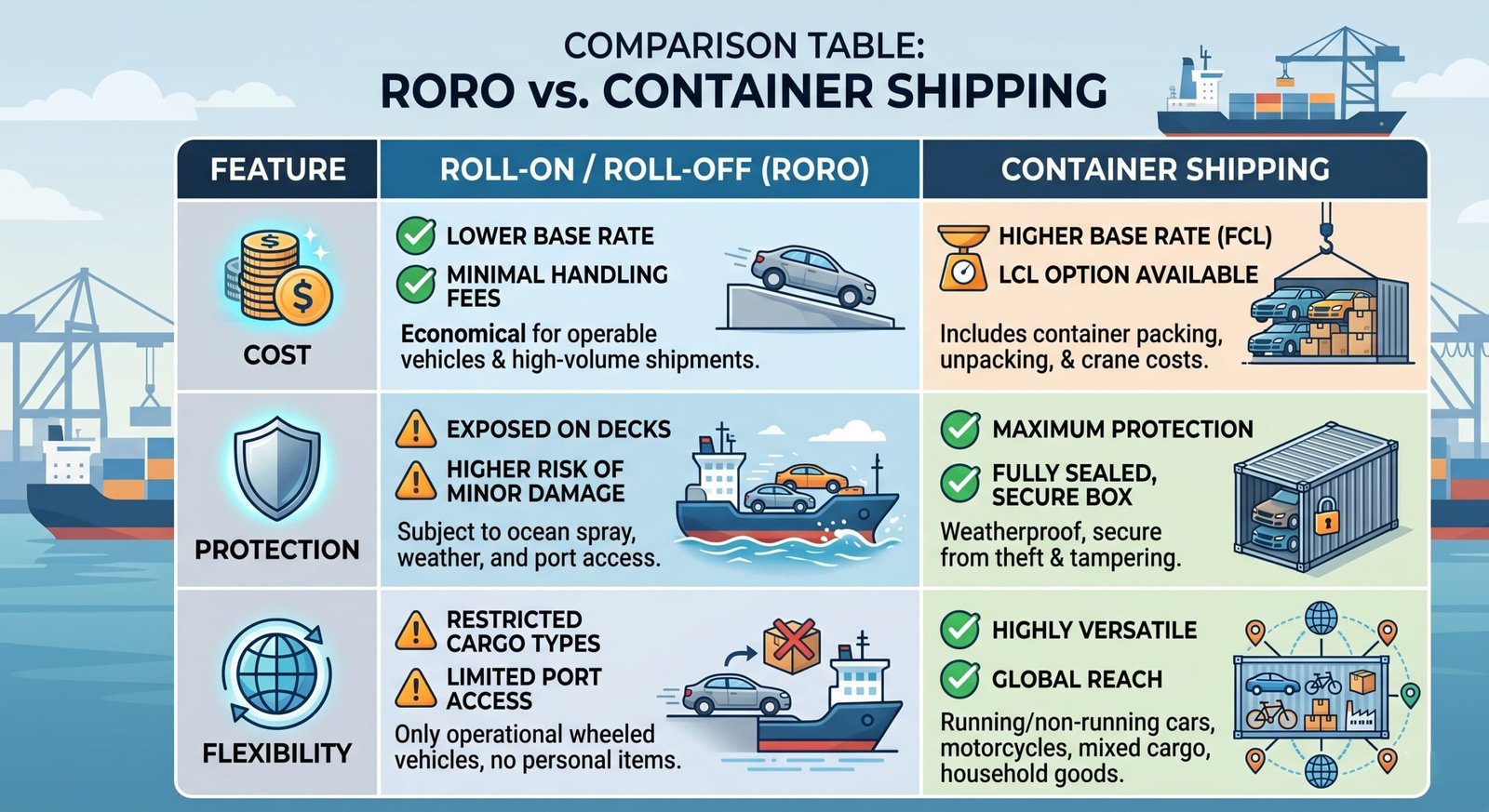
| Feature | RORO Shipping | Container Shipping |
| Best For | Single, drivable vehicles | High-value, luxury, or non-runners |
| Cost | Low (Most affordable) | High (Includes box rental & stuffing) |
| Protection | Moderate (Stored on internal decks) | High (Sealed and protected) |
| Extra Items | Not allowed | Can include spare parts/goods |
Conclusion: Is RORO Right for You?
If you are an individual buyer on a budget importing a standard, functional SUV or sedan, RORO is almost always the better choice. It maximizes your savings and simplifies the loading process. However, if you are importing a high-end luxury vehicle or multiple cars, the security and efficiency of a 40HQ container may justify the higher cost.
At Riching Auto, we help you choose the best shipping method for your specific budget and destination, ensuring your vehicle leaves Guangzhou Nansha Port safely and reaches you on time.