
Xiaomi SU7 and YU7 Export Guide for Dealers: China's Most-Talked-About EV for Overseas Markets
What overseas dealers need to know about sourcing, pricing, export availability, and market fit for Xiaomi's electric vehicles
Table of Contents
No Chinese car brand generated more international attention in 2024 than Xiaomi Auto. When Xiaomi — the smartphone and electronics giant — launched the SU7 electric sedan in March 2024, it sold out its initial allocation within minutes, generated millions of social media impressions globally, and placed China’s EV ambitions firmly in the mainstream international conversation. The YU7 electric SUV followed in 2025 with equally intense demand.
For overseas dealers, the Xiaomi SU7 and YU7 represent both a significant opportunity and a distinctive challenge. The opportunity is clear: these are high-specification, premium-positioned EVs from a brand with extraordinary global name recognition — particularly among buyers aged 25–45 who already own Xiaomi phones and trust the brand’s technology credentials. The challenge is equally clear: Xiaomi Auto’s production capacity has been heavily committed to the Chinese domestic market, making export sourcing a real constraint that every dealer needs to understand before making sourcing decisions.
This guide covers what overseas dealers actually need to know: SU7 and YU7 specifications, honest export availability and pricing, which markets suit these vehicles, how they compare to the BYD Seal and Atto3 in the export context, and what to expect when ordering through RichingAuto. We include the constraints alongside the opportunities — because accurate information makes better purchasing decisions.
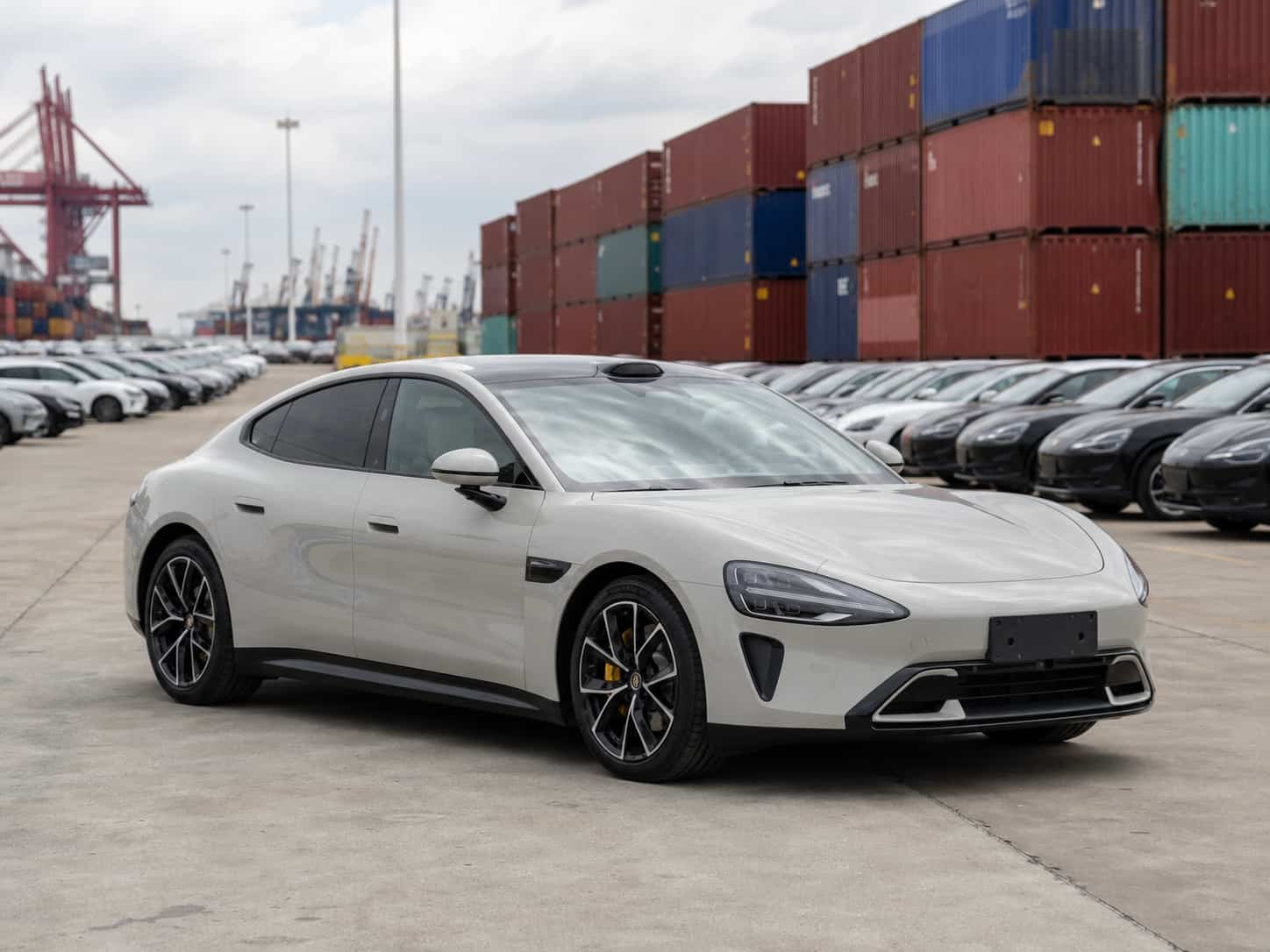
Key point: Xiaomi Auto is a subsidiary of Xiaomi Corporation — the same company that makes smartphones, TVs, and home appliances used by hundreds of millions of people globally. This brand recognition is a genuine selling asset: buyers in Africa and the Middle East who already own Xiaomi products approach the car with a level of pre-existing trust that new automotive brands typically have to spend years building.
Export Availability: What Dealers Must Understand First
Before comparing specifications, the most important factor for dealers considering Xiaomi is export availability. Xiaomi Auto launched with a single factory in Beijing (co-operated with BAIC) and demand has consistently exceeded production capacity since launch. The SU7 had a waiting list of several months in China through most of 2024. The YU7 launched to similarly constrained supply.
This means Xiaomi vehicles are not available from ready stock in the same way as Jetour, Changan, or BYD models. Export units are sourced through a combination of domestic market vehicles (purchased and exported by specialist traders), grey market channels, and a small number of authorised export arrangements. The FOB pricing reflects this scarcity — Xiaomi EVs carry a meaningful premium over their Chinese retail price when sourced for export.
| Factor | Current Export Reality |
|---|---|
| Official export programme | Not launched as of mid-2026 |
| Export source | Domestic market units via specialist traders and grey market channels |
| Price vs China retail | Export FOB typically 15–30% above Chinese retail |
| Availability | Limited — not consistently available as ready stock |
| Lead time | 4–10 weeks from order confirmation to container loading |
| International warranty | No official factory warranty outside China |
| After-sales service | No official Xiaomi Auto service network outside China |
| RHD availability | Not available — LHD only |
Important: The absence of an official international warranty and service network is the most significant risk factor for dealers considering Xiaomi. In markets where buyers expect manufacturer warranty support — UAE, Saudi Arabia, South Africa — this must be disclosed and managed. In markets where buyers are accustomed to grey market vehicles and independent service, this is a smaller concern. Always align your sourcing decision with your market’s expectations.
Xiaomi SU7: Specifications and Dealer Assessment
The SU7 is a C-segment electric sports sedan that launched in March 2024. Its design — widely described as resembling a Porsche Taycan at a fraction of the price — and its 800V charging architecture attracted immediate global attention. Three variants are available: Standard, Pro, and Ultra, with significantly different specifications and price points.
SU7 Key Specifications by Variant
| Specification | SU7 Standard | SU7 Pro | SU7 Ultra |
|---|---|---|---|
| Battery | 73.6 kWh LFP | 94.3 kWh NMC | 101 kWh NMC |
| WLTP range (approx.) | ~530 km | ~620 km | ~600 km |
| Motor / drive | 220 kW RWD | 220 kW RWD | 673 kW AWD |
| 0–100 km/h | ~5.28 sec | ~5.28 sec | ~2.78 sec |
| Peak DC charging | 210 kW (800V) | 210 kW (800V) | 210 kW (800V) |
| China retail price (approx.) | ¥215,900 (~$30,000) | ¥245,900 (~$34,000) | ¥529,900 (~$73,000) |
| Export FOB (Nansha) | $35,000–$45,000 | $42,000–$52,000 | $85,000–$110,000 |
| Notable features | 16" central screen, HUD, Xiaomi HyperOS, face recognition, 25-speaker Dolby Atmos audio (Pro/Ultra), Brembo brakes + Öhlins suspension (Ultra) | ||
Note: The SU7 Ultra is a halo product — its pricing and specification place it in supercar performance territory and it is not a mainstream dealer volume product. For most export markets, the SU7 Standard and Pro are the relevant variants. The Standard offers the best value proposition; the Pro adds meaningful range at a moderate price premium.
SU7 Dealer Assessment
When evaluating the SU7 as a dealer inventory item, the key considerations are:
- Showroom magnet: the SU7’s design generates exceptional showroom traffic. Buyers who come in to look at the SU7 often end up purchasing it or another EV in your range. Its social media visibility means buyers arrive already knowing about it.
- Per-unit margin potential: the sourcing premium on SU7 export units is real, but so is the retail premium. In Gulf markets where the SU7 retails at $45,000–$60,000, margins of $8,000–$15,000 per unit are achievable for well-sourced stock.
- Volume constraints: do not build a business model around consistent SU7 volume. Treat it as a premium anchor unit — 1–2 units per container, mixed with volume models that carry your regular turnover.
- Warranty conversation: prepare a clear answer for the warranty question. Options include: arranging a local warranty through an independent provider, being transparent about grey market status, or positioning the vehicle to buyers who understand and accept this.
- Market selection: the SU7 performs best in markets with strong tech culture, EV infrastructure, and buyers aged 25–45. UAE, Saudi Arabia, South Africa’s major cities, and Lagos premium segment are the strongest targets.
Xiaomi YU7: The Electric SUV Follow-Up
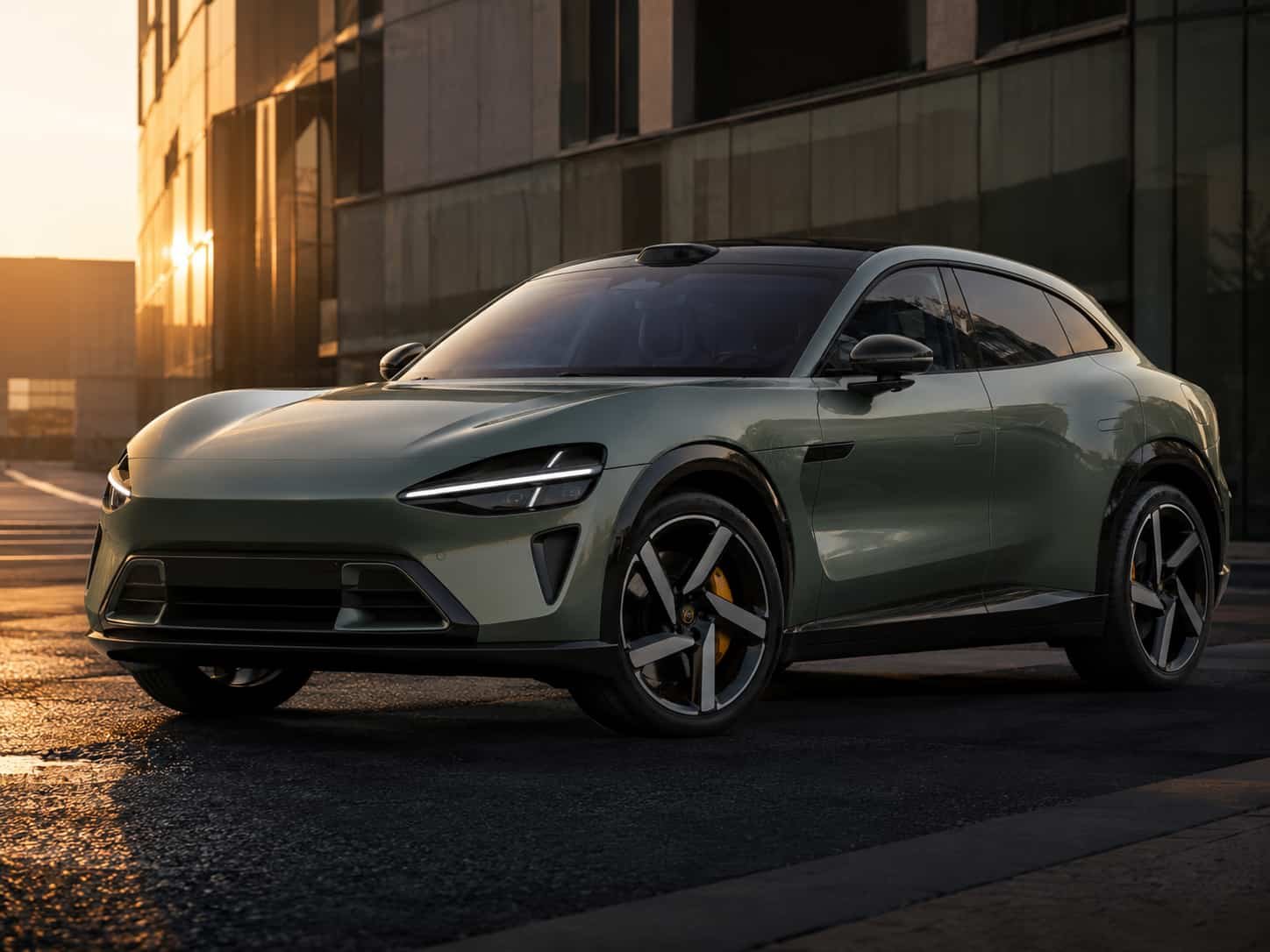
The YU7 is Xiaomi’s electric SUV, launched in 2025. Built on the same platform as the SU7 with similar technology underpinnings, the YU7 targets the premium EV SUV segment — competing directly with the Tesla Model Y and BYD Sea Lion 6/7 in China, and potentially the BYD Atto3 and Geely Monjaro in export markets at a higher price point.
For overseas dealers, the YU7 adds an important dimension to the Xiaomi export conversation: SUV body style. The SU7’s sedan profile limits its appeal in markets where SUVs are the dominant preference — much of Africa and the Gulf. The YU7 SUV body opens the Xiaomi brand to a larger proportion of buyers in these markets.
YU7 Key Specifications by Variant
| Specification | YU7 Standard | YU7 Pro | YU7 Ultra |
|---|---|---|---|
| Battery | ~96 kWh LFP | ~96 kWh NMC | ~101 kWh NMC |
| WLTP range (approx.) | ~620 km | ~570 km | ~580 km |
| Motor / drive | ~220 kW RWD | ~220 kW RWD | ~600 kW+ AWD |
| 0–100 km/h | ~5.5 sec | ~5.5 sec | ~3.2 sec |
| Peak DC charging | 210 kW (800V) | 210 kW (800V) | 210 kW (800V) |
| Seating | 5 seats | 5 seats | 5 seats |
| China retail price (approx.) | ~¥253,500 (~$35,000) | ~¥269,900 (~$37,000) | ~¥329,900 (~$46,000) |
| Export FOB (Nansha) | $42,000–$52,000 | $45,000–$56,000 | $58,000–$72,000 |
| Notable features | Panoramic glass roof, 16.1" screen, HUD, air suspension (Ultra), Xiaomi HyperOS ecosystem integration | ||
Note: YU7 export pricing is more volatile than SU7 pricing as of mid-2026, as the model is newer and export channel pricing has not yet stabilised. Treat YU7 FOB estimates as indicative — request a live quote when ordering.
Xiaomi vs BYD vs Tesla: How to Position Xiaomi in Your Market
Dealers who already stock BYD models will ask the obvious question: why add Xiaomi when BYD already covers the premium EV sedan segment with the Seal? The answer depends on your market and your buyer profile — but the positioning is genuinely different in several important ways.
| Factor | Xiaomi SU7 Standard | BYD Seal (RWD LR) | Tesla Model 3 (RWD) |
|---|---|---|---|
| Segment | Premium EV sports sedan | Premium EV sedan | Premium EV sedan |
| WLTP range | ~530 km | ~700 km | ~629 km |
| Peak DC charging | 210 kW (800V) | 150 kW | 250 kW |
| 0–100 km/h | ~5.28 sec | ~5.9 sec | ~6.1 sec |
| Export FOB (Nansha) | $35,000–$45,000 | $19,000–$28,000 | Not available from China |
| International warranty | No (grey market) | Limited — check by market | Yes (where Tesla sold) |
| Brand recognition (tech buyers) | Very high — Xiaomi ecosystem | Growing | Very high |
| Best for | Tech-loyal premium buyers, showroom traffic | Volume premium EV, better after-sales | Where Tesla is sold |
The key insight: the Xiaomi SU7 is not a substitute for the BYD Seal — it is a complement. The Seal is your volume premium EV with better after-sales support and lower FOB cost. The SU7 is your showroom flagship that attracts buyers who specifically want Xiaomi and are willing to pay a premium for it. For a complete EV portfolio, having both makes sense in markets with sufficient EV demand.
Which Markets Suit the Xiaomi SU7 and YU7?
Given the export constraints, after-sales considerations, and premium pricing, Xiaomi vehicles are best suited to a specific set of dealer markets:
Strong Fit Markets
- UAE (Dubai, Abu Dhabi): the strongest overseas market for Xiaomi vehicles. Dubai’s tech-forward buyer culture, strong EV infrastructure, 800V charging availability, and high concentration of Xiaomi ecosystem users create ideal conditions. Grey market luxury and premium vehicles are well understood by UAE buyers. Retail prices of $45,000–$65,000 for SU7 are achievable.
- Saudi Arabia (Riyadh, Jeddah): growing EV infrastructure and a young tech-aware buyer demographic that already owns Xiaomi devices. The SU7’s Porsche-like design generates strong interest. EV charging is available in major cities. Retail premium over FOB is achievable.
- South Africa (Johannesburg, Cape Town): a smaller but genuine market for premium EVs among high-income urban buyers. The SU7’s specification at its retail price point is compelling against European EV alternatives. Home charging with solar is common among this buyer segment.
- Nigeria (Lagos premium tech segment): a niche but real market — Lagos has a growing community of tech-forward, high-income buyers who follow Chinese automotive developments. The SU7 is aspirational stock rather than volume stock in this market.
Lower Fit Markets — Consider Alternatives
- Markets with limited public fast charging: the SU7’s 800V architecture is wasted without 800V charging infrastructure. In markets with only slow AC charging available, a BYD Atto3 or Geely Boyue Pro is a more practical choice for buyers.
- Markets requiring RHD vehicles: Xiaomi does not produce RHD variants — this eliminates the SU7 and YU7 from markets including Kenya, South Africa (some buyers prefer RHD), and other RHD markets.
- Markets where after-sales reliability is paramount: fleet buyers, government procurement, and buyers in markets with no independent EV service infrastructure will have legitimate concerns about grey market Xiaomi ownership. In these cases, BYD or Geely with growing service presence is a better recommendation.
Key point: South Africa is LHD in its major urban centres but officially drives on the left — meaning it accepts both LHD and RHD vehicles, and LHD is common in the premium import segment. UAE and Saudi Arabia are LHD markets where the SU7 and YU7 are a direct fit. For a full overview of LHD vs RHD market requirements, reference our Nansha Port export guide which covers LHD/RHD confirmation as part of the ordering process.
Container Loading Plans for Xiaomi Models
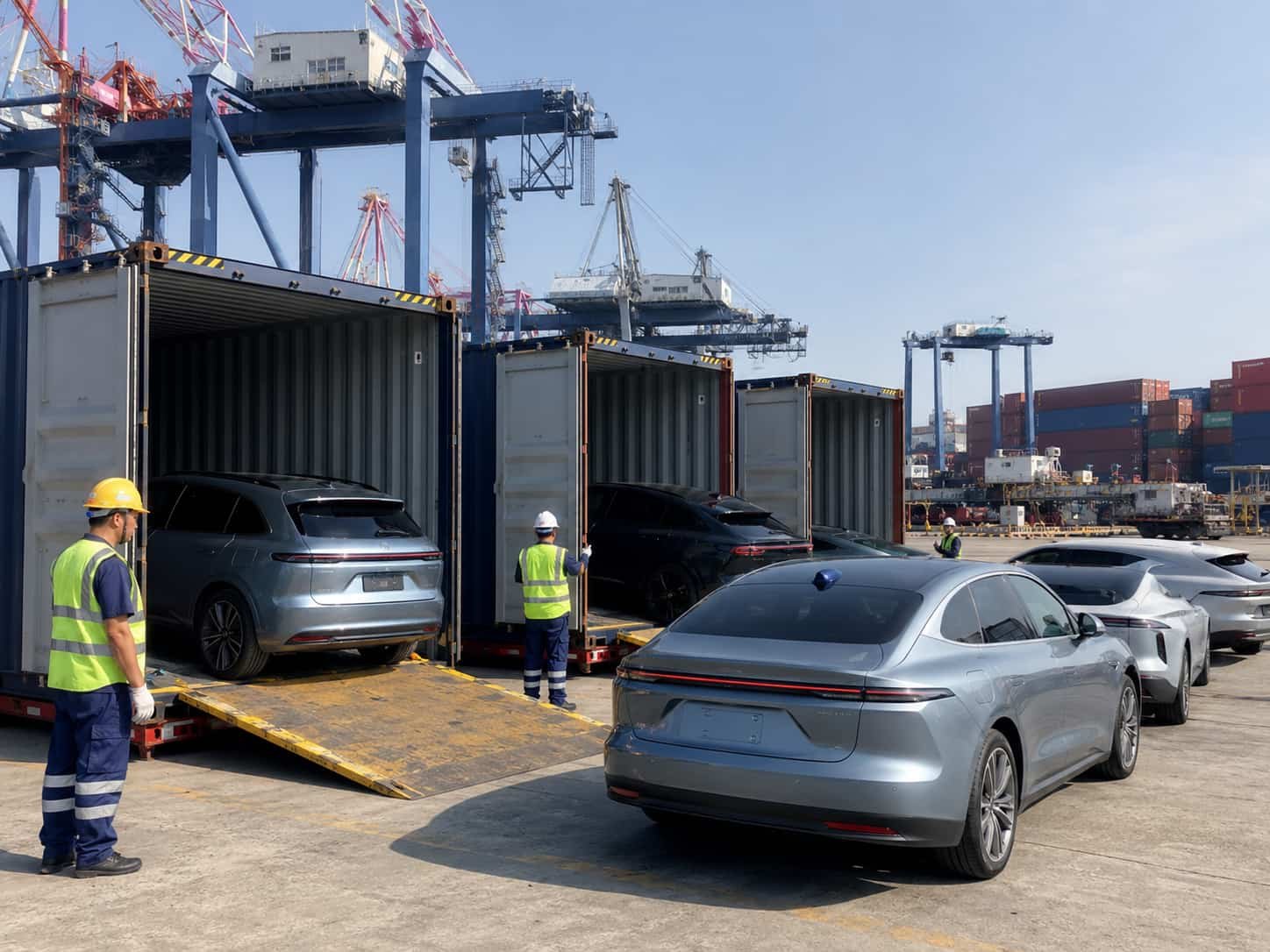
Because Xiaomi vehicles carry a premium FOB price and limited per-container unit counts, they work best as anchor units in mixed-brand containers rather than as single-brand loads. This approach maximises your container capital allocation while maintaining volume turnover alongside the premium units.
| Configuration | Container | Units | Total FOB | Best For |
|---|---|---|---|---|
| 2× Xiaomi SU7 Standard | 40ft HC | 2 | $70,000–$90,000 | Premium-only SU7 load — Gulf prestige |
| 1× SU7 Standard + 3× BYD Atto3 | 40ft HC | 4 | $80,000–$108,000 | Best first Xiaomi order — anchor + volume |
| 1× SU7 Pro + 2× BYD Seal | 40ft HC | 3 | $80,000–$104,000 | Premium EV sedan focus — UAE/Saudi |
| 1× YU7 Standard + 3× BYD Atto3 | 40ft HC | 4 | $87,000–$115,000 | Xiaomi SUV anchor + BYD mainstream |
| 1× SU7 + 1× Tank 300 + 2× Changan CS75 | 40ft HC | 4 | $81,000–$114,000 | Multi-brand premium — EV + off-road + family |
Design tip: The most practical Xiaomi container strategy for most dealers is: 1 SU7 or YU7 as the premium showroom anchor + 3 volume units (BYD Atto3, Geely Boyue Pro, or Changan CS75). This gives you a high-traffic showroom conversation piece without over-committing capital to premium units that take longer to turn.
What to Include in Your Xiaomi Inquiry
Xiaomi sourcing requires more specificity than other brands due to variant price differences and limited availability. Include the following in your inquiry:
- Model and variant: SU7 Standard, Pro, or Ultra — or YU7 Standard, Pro, or Ultra. Significant price differences between variants.
- Colour: specific colour matters more for Xiaomi than other brands — the SU7 launched with distinctive colours (Aqua, Olive, Black, White, Red) that buyers specifically request.
- Year and software version: Xiaomi regularly pushes OTA software updates — newer build dates often have updated HyperOS features.
- Mileage tolerance: some export SU7 units have been registered in China before export — specify whether you accept previously registered vehicles or need zero-mileage units.
- Destination market: critical for LHD confirmation (all Xiaomi are LHD) and for our warranty advice.
- FOB budget: given the sourcing premium, be realistic — SU7 Standard export FOB starts around $35,000.
- Timeline flexibility: Xiaomi sourcing takes longer than ready stock brands — 4–8 weeks is typical. Confirm you can accommodate this.
- Container context: are you ordering Xiaomi as a standalone container or as an anchor unit mixed with other brands?
Conclusion
The Xiaomi SU7 and YU7 are the most exciting Chinese vehicles in the international conversation right now — and that excitement is a genuine business asset for dealers who can source and position them correctly. The brand recognition, the design quality, and the specification-to-price ratio are all exceptional. The constraints — export availability, grey market status, no official international service network — are real and must be managed, not ignored.
The dealers who will do best with Xiaomi are those who treat it as a premium anchor product: one or two units per container, mixed with volume brands like BYD, Geely, or Changan that provide the regular turnover. The Xiaomi generates the showroom traffic and the premium margin; the volume brands keep the business running.
RichingAuto can source Xiaomi SU7 and YU7 units through our established trading network in Guangzhou. Availability is not guaranteed at the same level as our regular ready stock brands, but we maintain active sourcing relationships and will advise on current availability and timeline when you inquire. Contact us on WhatsApp with your target variant, colour, destination, and budget.