How to Source Brand New Cars from China: A Dealer's Guide to Factory-New Vehicle Export

How the new vehicle sourcing channels work, which models are available, FOB pricing expectations, lead times, and the complete order process from Chinese dealer network to your overseas lot

Table of Contents

The narrative around Chinese car exports has historically focused on used vehicles — and for good reason. Used Chinese cars have dominated the export market to Africa and parts of the Middle East for a decade. But the landscape has changed significantly. Brand new Chinese vehicles are now being exported in growing volumes, driven by three forces: Chinese manufacturer ambition to build global brand recognition, market demand in Algeria (3-year age limit) and Gulf countries (buyer preference for new), and the growing realisation among overseas dealers that new Chinese vehicles can compete with used Japanese alternatives on both price and specification.

Sourcing brand new vehicles from China is a different process from sourcing used ready stock. The vehicle does not exist at an exporter’s yard waiting for you — it must be procured through China’s automotive dealer network, which has its own dynamics, lead times, and pricing structures. Understanding how this works is essential for dealers who want to build a new-vehicle supply channel alongside or instead of a used-vehicle operation.

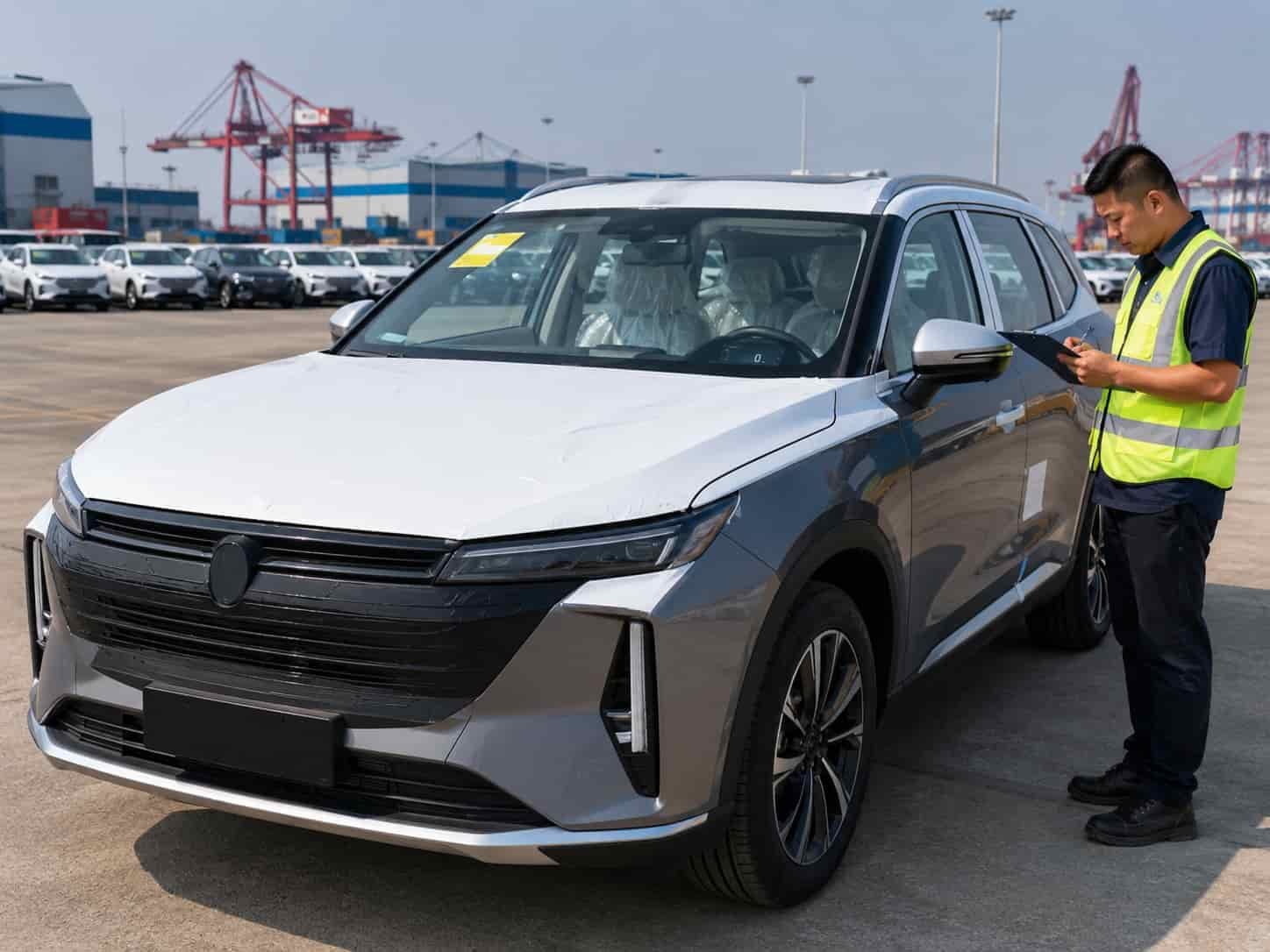
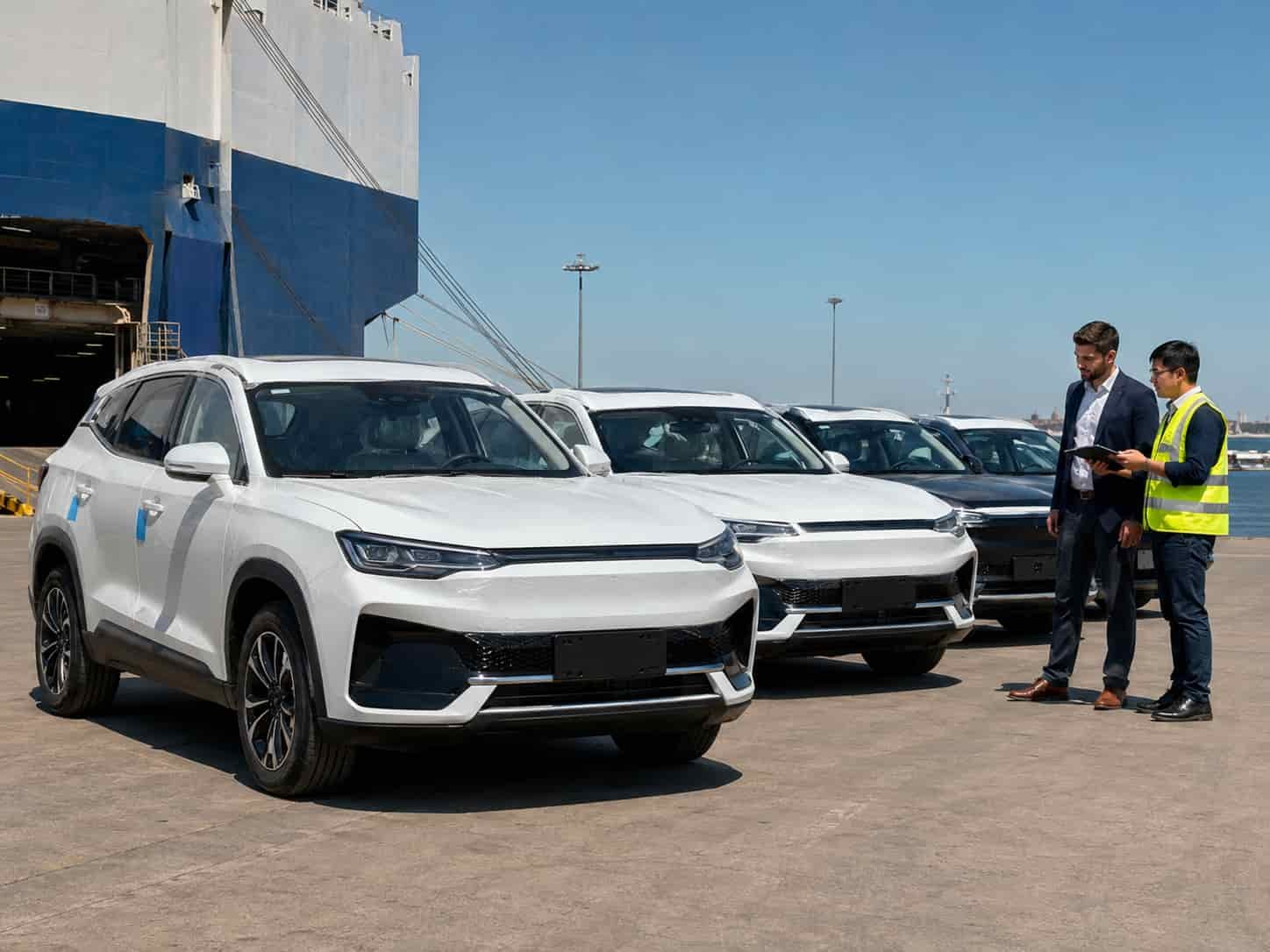
This guide covers the complete picture: how new Chinese vehicles are sourced for export, the different channels available, which models are realistically accessible for overseas dealers, FOB pricing expectations versus used, lead times, the order and payment process, and which markets are best suited to new vehicle supply. It complements our earlier guide on new cars vs used cars from China, which covers the strategic decision between the two approaches.Brand new Chinese SUV being inspected at Guangzhou factory export yard with zero mileage for overseas dealer shipment
Key point: Brand new Chinese vehicles for export are sourced through China’s domestic automotive dealer network — not from factory export programmes in most cases. This means lead times are longer than used ready stock (typically 3–8 weeks), prices are close to domestic retail, and availability depends on what the dealer network holds at a given time. Understanding this sourcing structure is the starting point for building a new-vehicle supply channel.

How Brand New Chinese Vehicle Sourcing Works

To understand how to source new Chinese vehicles for export, you need to understand how the Chinese domestic automotive market is structured:

China’s Automotive Dealer Network

In China, vehicle manufacturers sell new cars through an authorised dealer network — similar to the franchise dealer model in Western markets. Each major brand (Changan, BYD, Geely, Jetour, etc.) has a network of branded showrooms across China where consumers buy new vehicles. These dealers purchase inventory from the manufacturer and sell to consumers.

For export purposes, a Chinese car exporter like RichingAuto sources new vehicles from this dealer network — either directly from brand dealers or through the dealer’s end-of-batch or incentive stock. The vehicle is then exported under a standard commercial export process. This is not the same as the manufacturer’s own export programme (which is a separate, more complex channel).

The Three New Vehicle Sourcing Channels

Channel Description Lead Time Price vs Retail Best For
Dealer network sourcingExporter purchases from authorised Chinese dealer on your specification3–6 weeksClose to domestic retail + exporter marginSpecific model/colour/spec requirements
Dealer overstock / end-of-batchExporter sources from dealers offloading slow-moving or end-of-model-year stock1–3 weeks5–15% below standard retailVolume orders; flexible on exact spec
Manufacturer export programmeManufacturer's own export channel for some brands in some markets6–12 weeks+Manufacturer-set priceLarge volumes; official distributor arrangements

Note: For most overseas dealers importing through RichingAuto, the dealer network sourcing channel is the most practical. Dealer overstock opportunities are excellent when available — these can offer new vehicle pricing 5–15% below standard retail because the Chinese dealer wants to move inventory. We actively monitor Guangzhou dealer networks for these opportunities. For context on the difference between ready stock and custom order (which applies equally to new vehicles), see our guide on ready stock vs custom order.

New Vehicle FOB Pricing: What to Expect

Brand new Chinese vehicle FOB pricing from Nansha Port is structured differently from used vehicle pricing. Instead of the condition-driven variability of used stock, new vehicle pricing is primarily determined by:

  • Chinese domestic retail price (MSRP): the starting point is what the vehicle costs in China. Domestic MSRP is publicly available and widely known.
  • Dealer margin and export premium: Chinese dealers sell at or near MSRP. The exporter adds their margin for sourcing, export handling, and documentation. Total export FOB is typically 5–15% above Chinese domestic retail.
  • Currency and timing: the RMB/USD rate at the time of purchase affects final FOB pricing. Chinese domestic prices in RMB translate to USD at the prevailing rate.
  • Model year and stock availability: end-of-model-year stock and dealer overstock can offer meaningful discounts. Current model year at launch can have limited availability and premium pricing.

Model China Domestic MSRP (approx.) Export FOB (Nansha) Premium over 3yr Used Key New vs Used Trade-Off
Changan CS55 Plus¥110,000–¥135,000 (~$15k–$19k)$15,000–$19,000+$5,000–$7,000Full spec + warranty vs lower capital
Changan CS75 Plus (1.5T)¥130,000–¥155,000 (~$18k–$21k)$18,000–$22,000+$6,000–$8,000Manufacturer warranty opens Gulf segment
Jetour T2¥180,000–¥250,000 (~$25k–$35k)$25,000–$33,000+$8,000–$12,000Premium 4WD; Gulf + Algeria key markets
BYD Atto3¥140,000–¥170,000 (~$19k–$24k)$20,000–$26,000+$5,000–$8,000Official warranty + EV for Gulf/SA
BYD Seal (RWD LR)¥185,000–¥220,000 (~$26k–$31k)$26,000–$33,000+$6,000–$10,000Premium EV sedan; Gulf prestige
Geely Monjaro¥175,000–¥220,000 (~$24k–$31k)$24,000–$30,000+$6,000–$9,000CMA+ platform; Gulf premium SUV
Tank 300 (2.0T petrol)¥220,000–¥280,000 (~$30k–$39k)$30,000–$38,000+$8,000–$14,000Premium off-road; Gulf + Algeria

Note: FOB prices above are indicative for standard-spec, current-year new vehicles from the Guangzhou dealer network. Prices vary by colour, trim level, and current dealer stock levels. RMB/USD exchange rate movements affect pricing. Request a live quote for specific models and specs.

Which Chinese Models Are Readily Available as Brand New for Export?

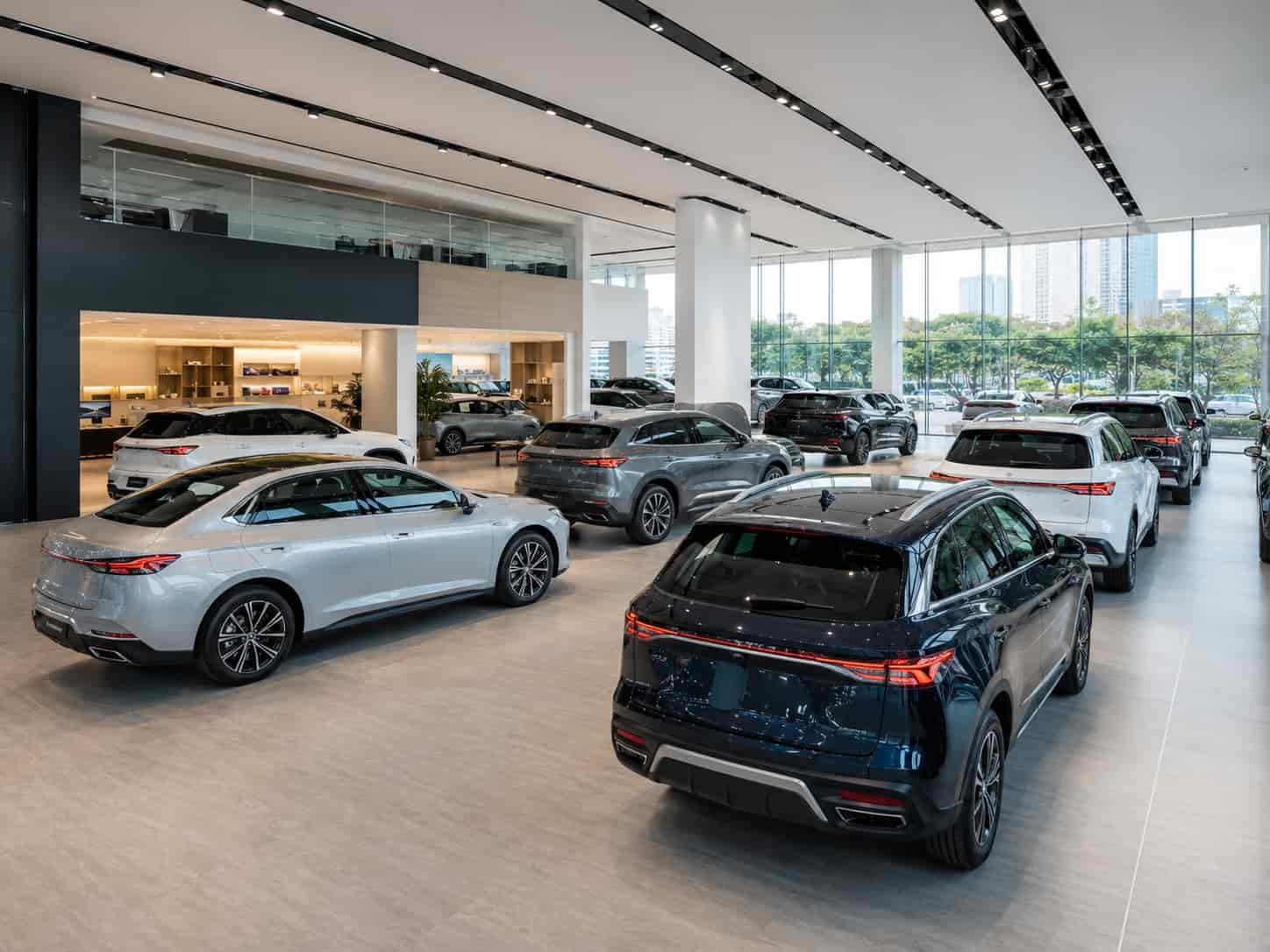
Not all Chinese models are equally accessible as new vehicles for export. Availability depends on the model’s domestic production volume, the dealer network density in Guangzhou, and current demand vs supply balance in China. Chinese automotive dealer showroom in Guangzhou supplying brand new vehicles for overseas export orders
Model / Brand New Export Availability Lead Time (Guangzhou) Notes
Changan CS55 PlusHigh — widely available1–3 weeksChangan has extensive Guangzhou dealer network
Changan CS75 PlusHigh — widely available1–3 weeksBest availability of the CS series
Jetour X70High — widely available1–3 weeksHigh domestic sales volume = good stock
Jetour T2Medium — popular model3–6 weeksHigh domestic demand; sometimes tight stock
BYD Atto3High (LHD) / Medium (RHD)2–4 wks (LHD); 4–8 wks (RHD)RHD for SA/Kenya harder to source
BYD SealMedium — RWD LR most available3–5 weeksAWD Performance: longer lead time
Geely MonjaroMedium3–6 weeksPremium model; adequate stock
Tank 300Medium — high demand4–8 weeksVery popular domestically; often needs advance order
GWM/Haval H6High — widely available1–3 weeksOne of China's best-selling SUVs
Tank 400 (V6)Lower — premium model6–10 weeksLower volume production; longer lead

Design tip: For dealers building a new-vehicle supply channel, the most practical approach is to place orders 6–8 weeks before your target container loading date. This gives the sourcing network time to confirm availability, lock in pricing, and arrange the pre-shipment inspection — while still meeting your import and retail timeline. For Algeria (3-year limit), this longer planning horizon is especially important.

The New Vehicle Order Process: Step by Step

Ordering brand new Chinese vehicles follows a similar overall structure to used vehicle orders — deposit, inspection, balance, shipping — but with several important differences in timing and process:

Step Action Timeframe New Vehicle Specifics
1Inquiry: specify model, exact spec, colour, quantity, destinationDay 1Colour and trim matter more for new — specify clearly
2Supplier confirms availability and quotes FOB price1–5 daysMay take longer than used — dealer network must be checked
3Lock in price; receive pro-forma invoice; confirm specDay 3–7Price confirmed for 7–14 days — act on confirmed stock
4Pay 30% depositDay 5–10Standard T/T payment
5Supplier sources vehicle from dealer networkDay 5–25Key new vehicle step — sourcing may take 1–4 weeks
6Pre-delivery inspection (PDI): photos + video of new vehicleDay 20–32Confirms spec, colour, zero odometer, protective film intact
7Pay 70% balance after PDI approvalDay 25–35Approve PDI in writing before transferring
8Export preparation; container loading at NanshaDay 28–42New vehicles loaded with extra care — foam protection
9Vessel transit Nansha → destinationDay 45–75Same as used — depends on destination
10Customs clearance at destinationDay 70–90New vehicle duty basis — full CIF, no depreciation
11Vehicle delivery to lot; remove protective elementsDay 75–95Pre-delivery check before display

Key point: The total timeline from order to vehicles on your lot for brand new Chinese vehicles is typically 75–100 days — significantly longer than used ready stock (50–75 days). The extra time is primarily in the sourcing and export preparation stages. Plan your inventory cycle with this longer lead time in mind.

Pre-Delivery Inspection for New Vehicles: What to Request

Even for brand new vehicles, a pre-delivery inspection (PDI) is essential before you pay the balance. Unlike used vehicle inspections that focus on condition and wear, the new vehicle PDI confirms that the vehicle matches your specification exactly and is in factory-perfect condition.

  • Odometer confirmation: must show 0km or very low mileage (under 50km for dealer pre-delivery checks only). Anything higher requires explanation.
  • VIN plate photo: VIN must match the commercial invoice exactly.
  • Spec confirmation: confirm the model code, engine type, transmission type, and trim level match what you ordered. New vehicles in China have multiple trim levels that are not always obvious from exterior appearance.
  • Colour confirmation: confirm the colour code matches your order. Lighting in photos can make colours look different — request a clear exterior shot in natural daylight.
  • Protective film inspection: factory protective film should be intact on all painted surfaces, bumpers, and trim. Any areas where film has been removed or damaged should be documented.
  • Dashboard photo with ignition on: confirms no warning lights active. New vehicles should show clean dash — any warning light on a new vehicle requires investigation before accepting.
  • Build date confirmation: for markets with age restrictions (Algeria: 3 years), confirm the build date stamp (usually on the door jamb sticker). This must comply with your destination market’s restriction.
  • Short running video: engine start, idle, all windows operating. Confirms basic mechanical function before loading.

Key point: The new vehicle PDI is less about finding defects and more about confirming specification compliance. The most common issue with new Chinese vehicle exports is spec mismatch — the wrong trim level, an incorrect colour, or a different engine variant from what was ordered. A thorough PDI before balance payment catches these issues before the container is loaded. For the full inspection methodology, see our guide on how to inspect a car before export from China.

Which Markets Suit Brand New Chinese Vehicles?

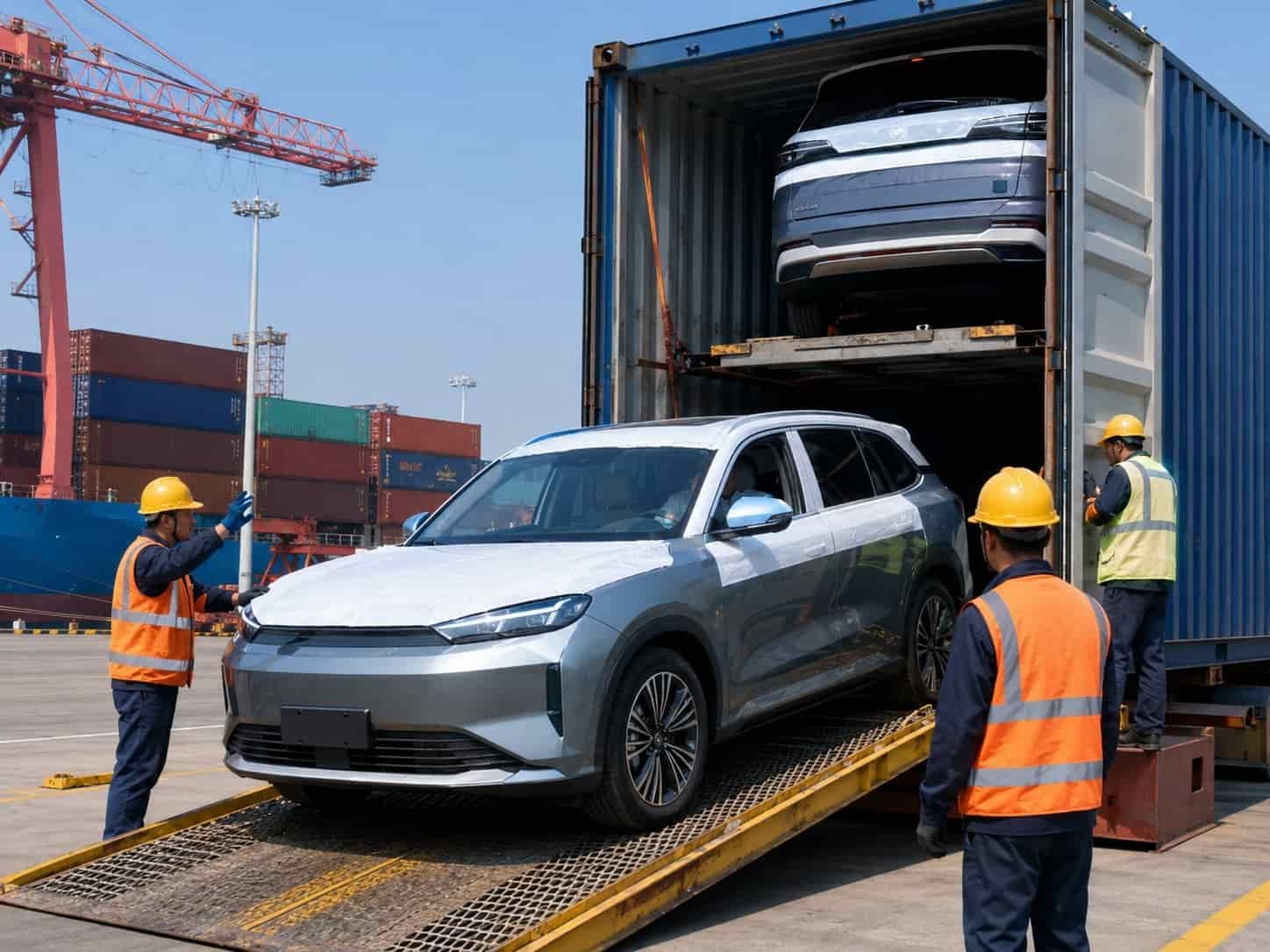
Not every market is equally suited to new Chinese vehicle imports. Here is where new vehicles deliver the strongest commercial case:Brand new Chinese SUVs being carefully loaded into 40ft container at Nansha Port for export to overseas first-owner buyers
Market New Vehicle Suitability Key Reason Recommended New Models
UAE (Dubai / Abu Dhabi)ExcellentLow 5% duty; Gulf buyers compare vs latest competitors; warranty adds valueBYD Atto3, BYD Seal, ZEEKR 7X, Jetour T2, Geely Monjaro
Saudi ArabiaExcellentLarge market; engine year matters; 7-seat new vehicles in demandJetour T2/X90, Changan CS75 2.0T, BYD Seal, Tank 400
AlgeriaEssential (regulatory)3-year age limit mandates new or near-new sourcingChangan CS55/CS75, Jetour X70/X90/T2, Haval H6, BYD Atto3
South AfricaStrongBrand-aware buyers; SABS simpler for current-year models; warranty mattersBYD Atto3 RHD, GWM/Haval H6 RHD, Geely Boyue Pro RHD
Nigeria (premium)Good for premium segmentLagos premium buyers pay new-vehicle pricing for prestige modelsJetour T2 new, Tank 300 new, BYD Seal new
KenyaLimitedKRA full CRSP rate on new; RHD new availability limitedBYD Atto3 RHD new (Nairobi fleet only)
Ghana / TanzaniaNot recommendedPrice-sensitive; used economics significantly betterUsed 2–5yr preferred

Warranty Arrangements for New Chinese Vehicles

One of the most significant advantages of new vehicles over used is warranty coverage — but this advantage only applies in markets where the Chinese brand has an official dealer and service network. Here is how warranty works for new Chinese vehicle exports:

Brand Markets with Official Warranty Warranty Terms (standard) For Other Markets
BYDUAE, Saudi Arabia, South Africa, Kenya3 years / 100,000km (check current terms)Local warranty arrangement required
GWM/HavalUAE, Saudi Arabia, South Africa, Algeria (Haval)3 years / 100,000kmLocal arrangement required
GeelyUAE, Saudi Arabia, South Africa3 years / 100,000kmLocal arrangement required
ChanganUAE, Saudi Arabia, Algeria, some African marketsVaries by market — confirm with distributorLocal arrangement required
Chery/OmodaUAE, Saudi Arabia, South AfricaVaries by model and marketLocal arrangement required
JetourLimited official markets as of 2026Growing — confirm by destinationLocal arrangement required
Tank (GWM)UAE, Saudi Arabia, some GulfVariesLocal arrangement required

Note: For markets where the Chinese brand does not have an official dealer, you can offer buyers a locally arranged warranty through an independent warranty provider. This is standard practice in many markets for grey market and independently imported vehicles. Disclose this clearly to buyers and ensure the warranty provider is reputable. Do not claim manufacturer warranty in markets where none exists.

What to Include in Your New Vehicle Inquiry

New vehicle inquiries require more specific information than used vehicle inquiries. The sourcing network needs precise specifications to find the right vehicle:

  • Model, trim level, and engine: be specific. “Changan CS75 Plus 1.5T DCT Elite trim” is useful. “Changan CS75” is not.
  • Colour (interior and exterior): colour availability varies by model and trim. If you have flexibility, say so — it speeds sourcing.
  • LHD or RHD: confirm your market’s requirement. Most new Chinese vehicles are LHD — RHD narrows availability significantly.
  • Model year: current model year preferred. If previous year is acceptable at lower price, state this.
  • Build date requirement (if applicable): for Algeria (3-year limit), the build date must comply. Specify “2022 or newer build date” for 2025 orders.
  • Quantity: number of units. For 1–2 units, sourcing is flexible. For 5+, advance notice improves pricing.
  • Target loading date: when do you need the container loaded? This determines how quickly sourcing must happen.
  • Warranty requirement: confirm if official manufacturer warranty is needed (affects which markets and brands are suitable).
  • FOB budget ceiling: your maximum price at Nansha Port. This helps identify if dealer overstock opportunities are available. Overseas car dealer receiving first delivery of brand new Chinese SUVs from China at their dealership lot
Conclusion

Brand new Chinese vehicle sourcing is increasingly practical for overseas dealers — not just as a niche premium offering, but as a mainstream supply channel for Gulf markets, Algeria, and South Africa where new-condition vehicles are the preferred or regulatory-required choice. The key differences from used sourcing are longer lead times (3–8 weeks additional), pricing close to Chinese domestic retail, and a PDI process focused on spec compliance rather than condition assessment.

The strongest commercial case for new Chinese vehicles is in the Gulf, where low import duty (5%) and premium buyer expectations make the higher FOB cost viable. Algeria’s 3-year age restriction effectively mandates new or near-new sourcing. South Africa’s brand-aware buyers respond strongly to new-condition vehicles from brands with official SA presence and manufacturer warranty.

RichingAuto sources brand new vehicles through our established Guangzhou dealer network connections alongside our ready stock used vehicle inventory. Contact us on WhatsApp with your target model, spec, colour, destination, and timeline — we will confirm availability, provide a FOB quote for both new and used options, and advise on which approach best fits your market and margin requirements.

Frequently Asked Questions

QHow do I source brand new cars from China for my dealership?+
Through China's domestic dealer network — not directly from factories. Three channels: dealer network sourcing (3–6 weeks, standard pricing), dealer overstock (1–3 weeks, 5–15% below retail — best value), or manufacturer export programmes (6–12 weeks, large volumes only).
QHow long does it take to source and export a brand new Chinese car?+
75–100 days total from order to delivery — longer than used ready stock (50–75 days). Extra time is in sourcing (1–4 weeks) and export preparation. High-availability models (CS75, H6, X70) can be faster. Plan 8–10 weeks from order to delivery.
QHow much more expensive are new Chinese cars vs used?+
$3,000–$14,000 more FOB vs 3-year-old used, depending on model. New CS75 Plus: $18k–$22k vs 3yr used $10k–$13.5k. New Jetour T2: $25k–$33k vs 3yr used $15k–$20k. New pricing is Chinese domestic retail + 5–15% export margin.
QWhich markets are best for brand new Chinese cars?+
UAE and Saudi Arabia (5% duty, Gulf buyer expectations, warranty value), Algeria (3-year age limit mandates new/near-new), South Africa (brand-aware buyers, SABS simpler for official brands). Kenya, Ghana, Tanzania: used vehicles deliver better economics.
QDo brand new Chinese cars come with overseas warranty?+
Only where the brand has official dealers: BYD, GWM/Haval, Geely, Changan in UAE, Saudi, South Africa. Without official presence, locally arranged independent warranty is required. Never claim manufacturer warranty where none exists.
QWhat does a new car PDI cover?+
Spec compliance, not condition: odometer at 0km, VIN matches invoice, trim/engine matches order, correct colour, protective film intact, no dashboard warning lights, build date complies with destination age restrictions, short running video.
QCan I mix new and used Chinese vehicles in one container?+
Yes — often the most efficient strategy. 1–2 new premium units (new Jetour T2, BYD Seal) + 2–3 used volume models (used CS55, X70) covers both premium buyers and price-sensitive buyers from one shipment.