
How to Import Cars from China to Nigeria: A Complete Guide for Dealers (2026)
Nigeria import duty structure, Apapa Port process, vehicle age limits, best Chinese models for the Nigerian market, landed cost calculations, and the complete order process from Nansha Port to Lagos
Table of Contents
Nigeria is the largest vehicle market in sub-Saharan Africa and one of the most important destinations for Chinese car exports globally. With a population approaching 220 million, a growing urban middle class in Lagos, Abuja, and Port Harcourt, and an established appetite for both used and newer vehicles, Nigeria represents a significant and durable opportunity for dealers who understand the import process.
Chinese vehicles have been gaining ground in Nigeria consistently. Brands like Changan, BYD, Jetour, and Haval have moved from unknown names to recognisable choices in the Lagos market in under five years. The combination of newer specifications, competitive pricing relative to aged Japanese alternatives, and growing dealer and service networks in major cities has changed buyer perceptions significantly.
This guide covers the complete picture for dealers importing Chinese vehicles to Nigeria: the regulatory framework, import duty structure, Apapa Port process, vehicle age restrictions, landed cost calculations, the best Chinese models for different Nigerian market segments, and the step-by-step order process from Nansha Port. It is the dedicated Nigeria-specific guide that complements our broader car import business guide and our existing Nigeria used car import guide.
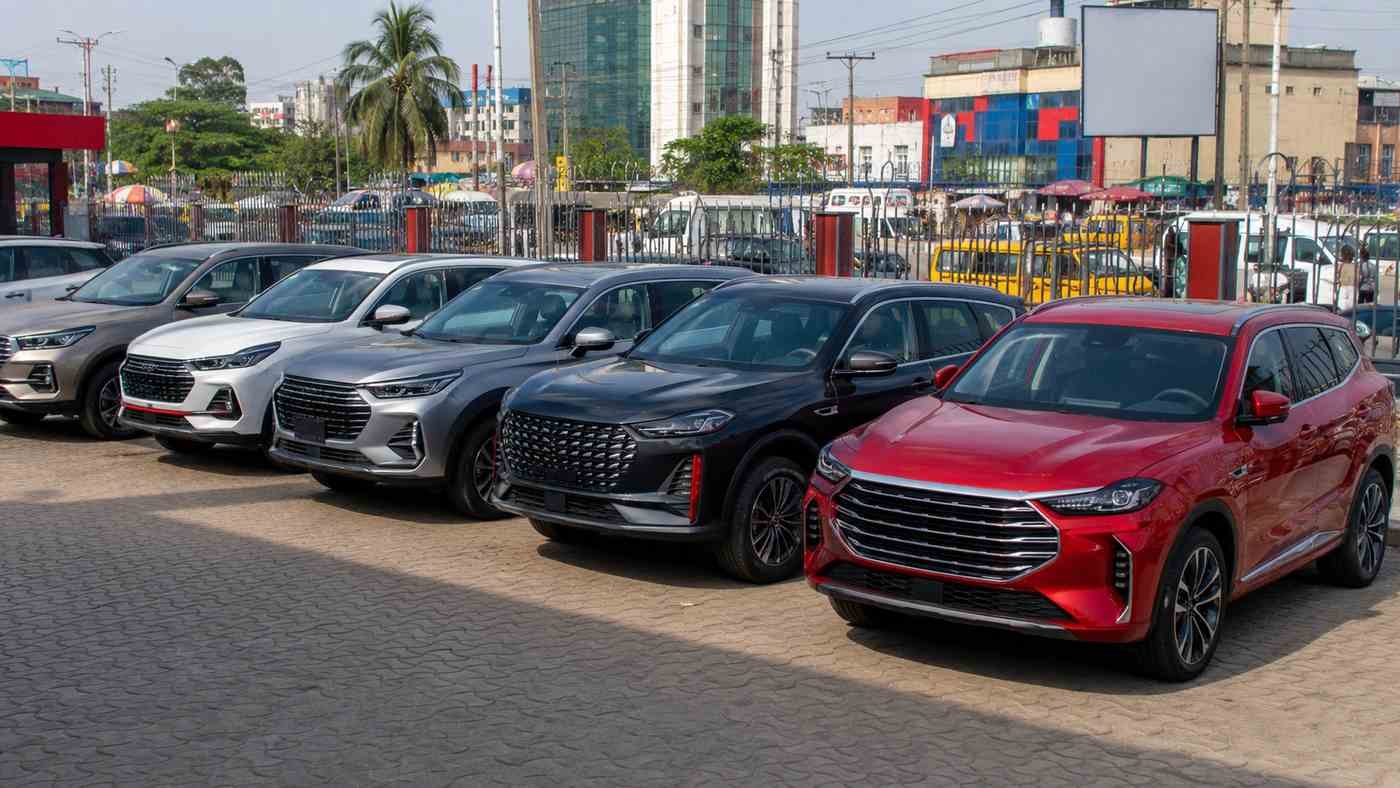
Nigeria is a right-hand traffic market — LHD vehicles (standard Chinese export) are the norm for all commercial vehicle trade. Unlike Kenya and South Africa, you do not need to source RHD vehicles for Nigeria. This is a significant logistical advantage that makes the full range of Chinese ready stock directly accessible.
Nigeria Car Market: Scale, Segments, and Chinese Brand Growth
| Nigeria Market Factor | Detail |
|---|---|
| Population | ~220 million — largest in Africa |
| Drive side | RIGHT — LHD vehicles (standard Chinese export) direct fit |
| Primary import ports | Apapa Port (main); Tin Can Island Port; Onne Port (Port Harcourt) |
| Vehicle age limit | 15 years — most permissive in Africa |
| Import duty rate | 35% on CIF value (passenger vehicles) |
| Total effective duty rate | ~40–50% of CIF (duty + VAT + levies) |
| Unique requirement | Form M — must be opened at Nigerian bank before goods are shipped |
| Currency | Nigerian Naira (NGN) — significant USD/NGN volatility; manage FX exposure |
| Key buying cities | Lagos (largest), Abuja, Port Harcourt, Kano, Enugu |
| Transit from Nansha | 25–35 days to Apapa Port |
Nigeria Import Duty Structure
Nigeria’s import duty on vehicles is structured through the Nigeria Customs Service (NCS). Understanding the full duty structure is essential because the effective rate is significantly higher than the headline 35% customs duty.
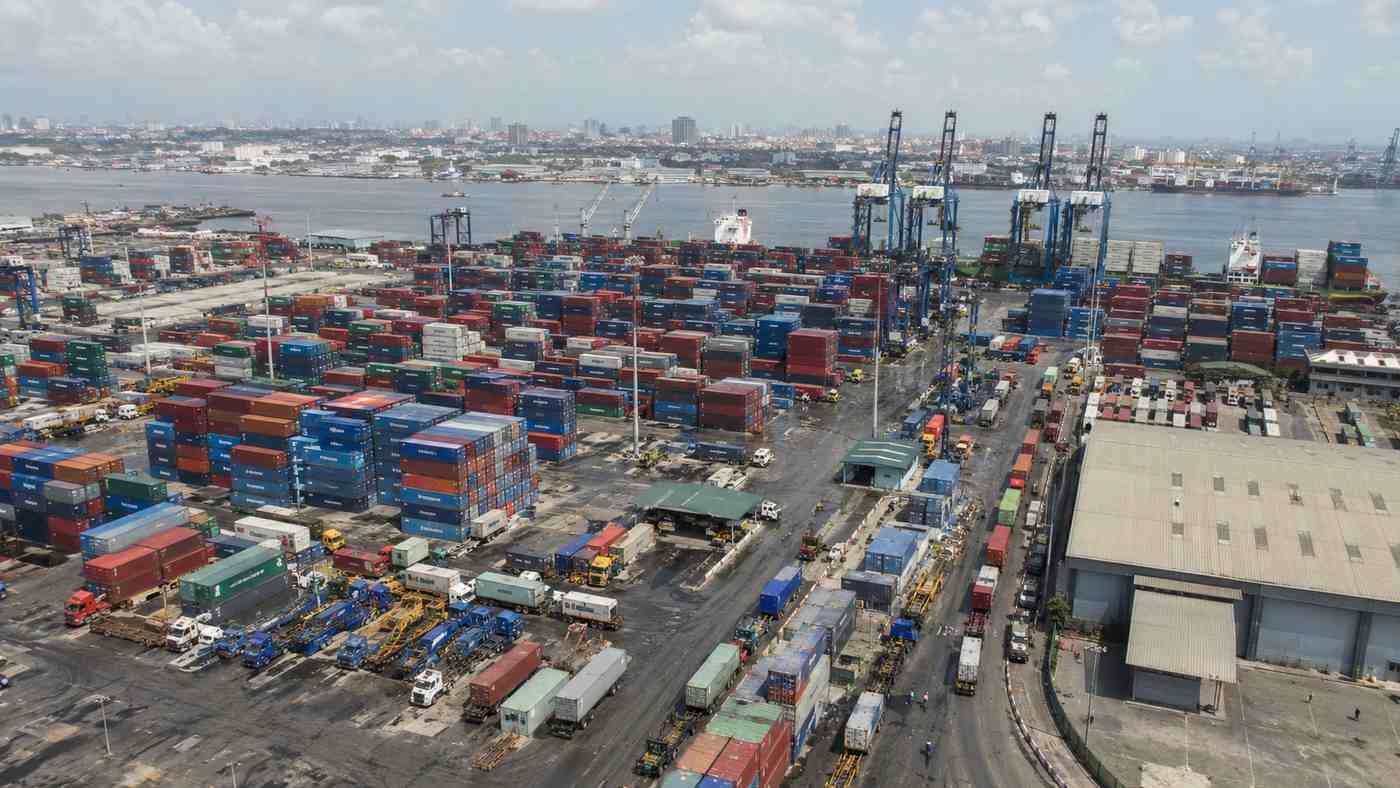
| Tax Component | Rate + Basis | Notes |
|---|---|---|
| Import Duty | 35% of CIF value | Standard rate for passenger vehicles from non-ECOWAS countries |
| VAT | 7.5% on (CIF + duty) | Applied on accumulated value after duty |
| CISS | 1% of FOB value | Comprehensive Import Supervision Scheme |
| ETLS + Port Levy | 1% of CIF (0.5% each) | ECOWAS trade levy + port development levy |
| Total effective rate | ~40–50% of CIF | Confirm with clearing agent — NCS benchmarks may apply |
Important: Nigerian customs valuation is based on CIF (Cost + Insurance + Freight), not just FOB. NCS uses published benchmark values for common vehicle models — if your actual CIF is lower than the NCS benchmark, they will assess duty on the benchmark figure. Your clearing agent must be aware of current NCS benchmarks for Chinese vehicles and advise you on realistic duty expectations before you commit to a purchase price.
Vehicle Age Restrictions in Nigeria
Nigeria has one of the most permissive vehicle age policies in Africa. The official limit is 15 years from year of manufacture at time of import. For a 2026 import, this means vehicles from 2011 or newer are eligible. In practice, most dealers focus on 3–8 year old stock for quality and resale value reasons — but the regulatory flexibility compared to Kenya (8 years) or Algeria (3 years) gives Nigerian dealers access to a much wider range of Chinese inventory.
| Vehicle Age | Import Permitted? | NCS Duty Basis | Dealer Recommendation |
|---|---|---|---|
| 0–3 years (new/near-new) | Yes | Full CIF value | Best resale; highest landed cost per unit |
| 3–6 years | Yes | Full CIF value | Sweet spot — good spec, lower FOB, strong resale |
| 6–10 years | Yes | Full CIF value | Viable if price is right; resale value declines |
| 10–15 years | Yes | Full CIF value | Legal but risky for resale; avoid unless specialist market |
| Over 15 years | No | N/A | Cannot be registered in Nigeria |
Key point: Unlike Kenya where KRA uses CRSP-based depreciation to reduce duty on older vehicles, Nigerian NCS does not systematically reduce duty based on age — the full CIF-based duty applies regardless of vehicle age. This means there is less financial incentive in Nigeria to import very old stock, and dealers should focus on 3–8 year old Chinese vehicles for the best balance of FOB cost, duty load, and retail margin.
Landed Cost Calculation: China to Lagos (Apapa Port)
Here is a realistic landed cost calculation for three common Nigerian import scenarios:
| Cost Component | Compact SUV (CS55, 3yr) | Mid-size SUV (CS75, 3yr) | Premium 4WD (T2, 2yr) |
|---|---|---|---|
| FOB Price (Nansha) | $10,000 | $13,500 | $22,000 |
| Ocean freight + insurance | $1,106 | $1,173 | $1,312 |
| Import duty (35% CIF) | $3,887 | $5,136 | $8,159 |
| VAT + CISS + levies | $1,547 | $2,048 | $3,254 |
| Port + clearing + last-mile | $950 | $950 | $1,100 |
| Total Landed Cost | ~$17,490 | ~$23,807 | ~$35,825 |
| Target Nigeria retail | N25M–N30M (~$16k–$20k) | N34M–N40M (~$22k–$27k) | N55M–N68M (~$36k–$45k) |
| Gross margin (est.) | $0–$3,000 (FX-dependent) | $0–$4,000 | $0–$9,000+ |
FX Warning: Nigeria retail pricing is in Naira (NGN), but your costs are in USD. The NGN/USD rate has been extremely volatile — from N460/$ in 2022 to N1,500+/$ by 2024. This FX exposure is the biggest financial risk in the Nigerian market. Calculate your retail price in USD equivalent at a conservative exchange rate, and reassess if the Naira weakens significantly between your purchase date and sale date. Many successful Nigerian dealers price vehicles in USD equivalent and convert at sale.
Nigerian Import Ports: Apapa, Tin Can, and Onne
| Port | Transit from Nansha | Region Served | Notes |
|---|---|---|---|
| Apapa Port (Lagos) | 25–32 days | Lagos, Southwest Nigeria, Abuja (via road) | Main vehicle import port; highest volume; most clearing agents here |
| Tin Can Island Port (Lagos) | 25–32 days | Lagos, Southwest Nigeria | Alternative to Apapa; growing vehicle handling; sometimes faster clearance |
| Onne Port (Port Harcourt) | 28–35 days | South-south Nigeria, Rivers, Delta State | Useful for south-south dealers; avoids Lagos congestion and long road haul |
Practical note: Apapa and Tin Can Island are both in Lagos and served by the same clearing agent ecosystem. Most Nigerian vehicle importers use one or the other based on their agent’s expertise and current port congestion. Onne Port is increasingly popular for dealers in the south-south region who want to avoid Lagos port congestion and the long road haul from Lagos to Port Harcourt.
Which Chinese Models Are Best for Nigeria?
The Nigerian market has distinct preferences shaped by road conditions (urban Lagos tarmac vs upcountry rough roads), buyer income levels (entry, mid, premium), and the strong reference point of Japanese used vehicles (Toyota Corolla, Camry, Prado) that buyers are familiar with. Chinese models that succeed in Nigeria are those that clearly beat Japanese alternatives on specification per dollar while being priced accessibly.

| Model | Segment | Nigeria Retail (approx.) | Why It Works in Nigeria |
|---|---|---|---|
| Changan CS55 Plus (3–4yr) | Entry compact SUV | N22M–N28M (~$14k–$18k) | Beats aged Nissan Qashqai and Tucson at similar price; newer spec; growing brand |
| Changan CS75 Plus (3–4yr) | Mid-size family SUV | N32M–N40M (~$21k–$26k) | Best volume model; competes vs used Toyota Venza/Highlander; strong Lagos demand |
| Changan UNI-K (2–3yr) | Premium coupe SUV | N40M–N50M (~$26k–$33k) | Distinctive design; Lagos premium buyers; stands out vs European alternatives |
| Jetour X70 (3–4yr) | Compact-to-mid SUV | N26M–N32M (~$17k–$21k) | Growing brand; modern spec; panoramic roof; competitive vs used RAV4 |
| Jetour X90 (3–4yr, 7-seat) | 7-seat family SUV | N32M–N40M (~$21k–$26k) | 7-seat demand strong; family buyers; value vs used Kia Sorento |
| Jetour T2 (2–3yr) | Full-size 4WD SUV | N55M–N70M (~$36k–$46k) | Premium Lagos/Abuja; oil sector/government; Prado alternative at half the price |
| BYD Dolphin (1–2yr) | Compact EV | N28M–N35M (~$18k–$23k) | EV for Lagos urban; lower running cost; growing charging in Lekki/VI area |
| Haval H6 (3–4yr) | Mid-size SUV | N30M–N38M (~$20k–$25k) | Established name; good service network; reliable sales baseline |
Key point: For first-time Nigerian importers, Changan CS75 Plus and Jetour X70 are the safest starting models — both have growing brand recognition in Lagos, clear retail price points, and sufficient spec to justify the premium over aged Japanese alternatives. For the premium segment, the Jetour T2 vs Toyota Prado comparison is one of the most compelling in the Nigerian market. See our full Jetour T2 vs Prado comparison for a detailed breakdown.
Nigerian Customs Process: NCS Vehicle Clearance
The Nigerian Customs Service (NCS) process for vehicle imports is document-intensive and requires an experienced clearing agent. The process has improved with the introduction of electronic systems but still requires careful management.
- Pre-arrival documentation: your clearing agent submits a Pre-Arrival Assessment Report (PAAR) through the Nigeria Customs e-Form M system before the vessel arrives. This starts the assessment process.
- Form M and Letters of Credit: all vehicle imports to Nigeria require a Form M from a Nigerian bank, which authorises the foreign exchange transaction. This must be opened before the goods are shipped. Your bank handles this, but it takes 3–7 business days.
- SON/NAFDAC inspection: the Standards Organisation of Nigeria (SON) may inspect vehicles for compliance with Nigerian standards. This is less common for used vehicles but required for new vehicle imports. Your clearing agent advises if this applies.
- NCS physical examination: customs officers examine a proportion of containers. For vehicle imports, this typically involves VIN verification, condition check, and confirming the vehicle matches documentation.
- Duty assessment and payment: NCS assesses duty based on CIF value (their benchmark or your actual CIF, whichever is higher). Duty is paid through the Nigerian Customs e-payment system.
- Container release: once duty is paid and documents cleared, the container is released. Expect 7–15 working days total for clearance at Apapa from vessel arrival.
- Vehicle registration: after clearing, vehicles must be registered with the Vehicle Inspection Office (VIO) and the Federal Road Safety Corps (FRSC) before sale. Your clearing agent or a specialist registration agent handles this.
Critical: Form M is the most important regulatory requirement unique to Nigeria. Without an open Form M, your Chinese supplier cannot ship the goods to Nigeria — banks and NCS will not process the import. Open your Form M as soon as you have confirmed your order with your supplier. Many first-time importers lose time because they do not start the Form M process early enough.
Step-by-Step: Ordering Chinese Cars for Nigeria
| Step | Action | Timeframe | Nigeria-Specific Notes |
|---|---|---|---|
| 1 | Open Form M at Nigerian bank | Before ordering — 3–7 days | Critical first step unique to Nigeria; requires pro-forma invoice |
| 2 | Inquiry to supplier: model, year, quantity, FOB budget | Day 1 | LHD confirmed; specify Apapa or Tin Can Port |
| 3 | Receive stock list; confirm vehicles; get pro-forma invoice | Day 1–3 | Pro-forma must match Form M details exactly |
| 4 | Pay 30% deposit via T/T | Day 3–7 | Use Form M-referenced bank account for compliance |
| 5 | Pre-shipment inspection received; pay 70% balance | Day 7–18 | Approve inspection in writing before balance transfer |
| 6 | Container loading at Nansha Port | Day 18–25 | CCPIT Certificate of Origin required for NCS |
| 7 | Clearing agent submits PAAR pre-arrival declaration | Before vessel arrives | Agent needs BL copy + all documents in advance |
| 8 | Vessel transit Nansha → Apapa/Tin Can | Day 25–57 | 25–32 day transit |
| 9 | NCS clearance + duty payment | Day 57–72 | Allow 7–15 working days; Form M bank payment |
| 10 | Container released; vehicles to dealer lot | Day 70–80 | Last-mile from port to lot |
| 11 | VIO/FRSC registration | Day 75–90 | Required before retail sale |
Nigeria vs Ghana: Key Differences for West African Dealers
| Factor | Nigeria | Ghana |
|---|---|---|
| Drive side | RIGHT — LHD direct fit | RIGHT — LHD direct fit |
| Primary port | Apapa / Tin Can Island, Lagos | Tema Port (25km from Accra) |
| Transit from Nansha | 25–35 days | 28–38 days |
| Vehicle age limit | 15 years (most permissive) | 10 years |
| Import duty (effective) | ~40–50% of CIF | ~40–50% of CIF |
| Unique requirement | Form M — bank authorisation before shipping | No Form M equivalent — simpler process |
| Market size | Much larger — hundreds of thousands/year | ~40,000–60,000 units/year |
| Currency risk | High NGN/USD volatility | GHS also volatile vs USD |
| Chinese brand awareness | Strong in Lagos/Abuja | Growing in Accra |
Note: For dealers considering both Nigeria and Ghana, Nigeria offers a much larger market but higher regulatory complexity (Form M) and significant currency risk. Ghana is simpler to navigate but smaller. Many dealers start with Ghana to learn the West Africa import process before moving to Nigeria. See our Ghana import guide for a direct comparison.
Conclusion
Nigeria is the most important single market for Chinese vehicle exports in sub-Saharan Africa, and for good reason: the scale is unmatched, LHD vehicles import directly without the RHD constraint that limits East and Southern Africa, and the 15-year age limit gives dealers access to the full range of Chinese inventory. The challenges — Form M banking requirements, NCS clearance complexity, Naira/USD volatility, and Apapa Port congestion — are real but manageable with the right clearing agent and banking relationships.
The dealers who succeed in Nigeria consistently do three things: they use an experienced NCS clearing agent who knows current benchmark values for Chinese vehicles, they manage FX exposure by pricing in USD equivalent rather than fixed Naira amounts, and they focus on models with growing Lagos brand recognition (Changan, Jetour, Haval) rather than unknown brands that require extended buyer education.
RichingAuto has experience shipping to both Apapa and Tin Can Island and can provide stock lists with Naira and USD landed cost estimates. Contact us on WhatsApp with your target models, budget, and target container date, or browse our current ready stock inventory to see available vehicles.