
Best Cars for Taxi and Transport Business in Africa: Chinese Models Guide (2026)
Which Chinese sedans and SUVs deliver the lowest cost per kilometre, best passenger experience, and highest reliability for taxi, ride-hailing, and transport fleet operators across Africa
Table of Contents
The transport business is one of the largest and most consistent demand drivers for vehicle imports across Africa. From individual owner-operators running a single taxi in Lagos to fleet managers buying 20 vehicles for a Nairobi ride-hailing operation, the calculus is the same: lowest cost per kilometre, highest passenger satisfaction, and reliable enough to generate income every day without unexpected downtime.
Chinese vehicles have changed the economics of the transport business in Africa significantly. Five years ago, the standard entry vehicle for an African taxi operator was a used Toyota Corolla or Honda Civic sourced from Japan. Today, a 2–3 year old Changan EADO Plus or BYD Dolphin offers newer technology, better fuel economy, more passenger comfort, and a lower purchase price — changing the calculation for operators who previously had no choice but to buy aged Japanese stock.
This guide covers the best Chinese vehicles for taxi, ride-hailing, and transport business use across Africa — organised by vehicle type (compact sedans, compact SUVs, larger passenger vehicles), with specific market recommendations for Nigeria, Ghana, Kenya, and South Africa. It covers the key metrics that matter for transport operators: fuel consumption, passenger space, reliability, maintenance cost, and purchase price.
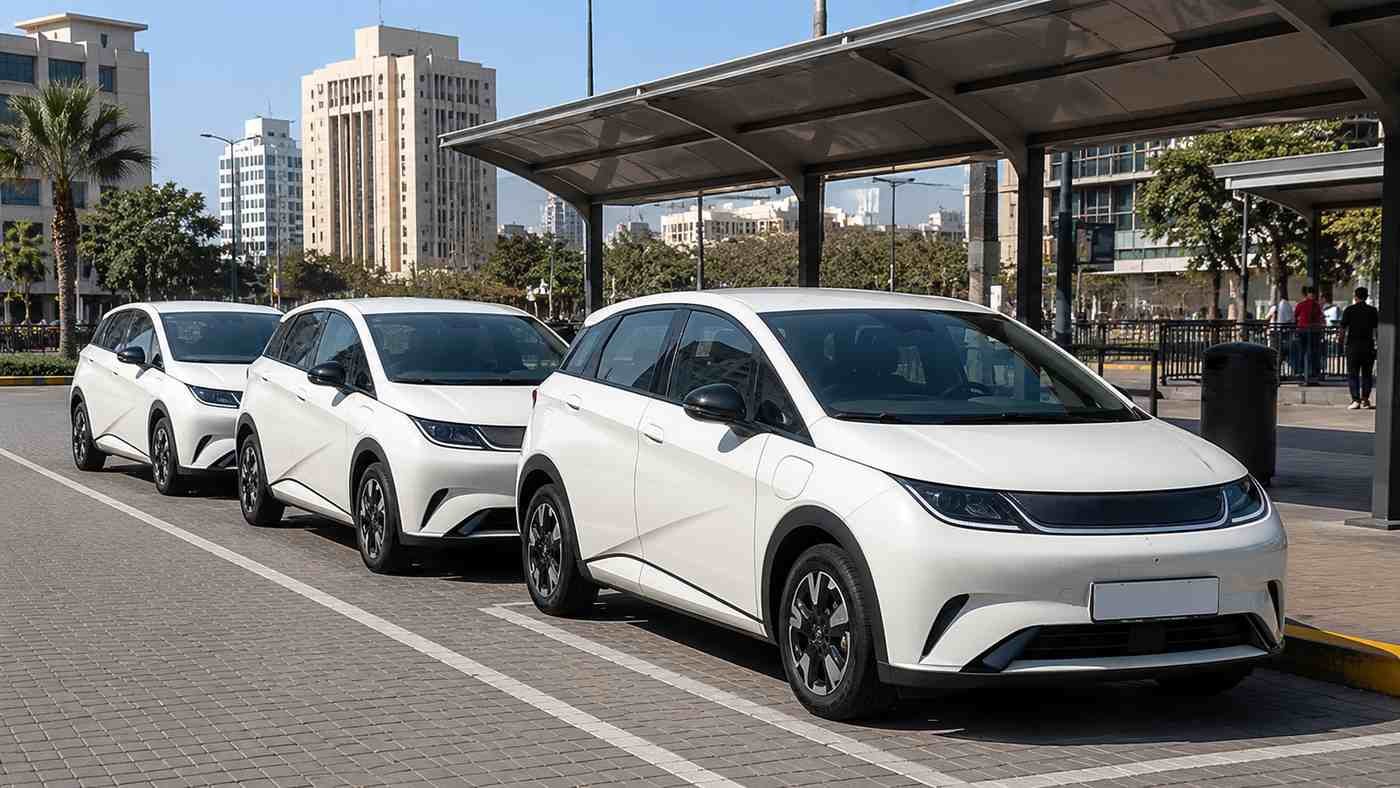
Who this guide is for: This guide is written for two audiences: transport business operators in Africa who are considering Chinese vehicles for their fleet, and dealers who want to understand the transport business buyer segment and stock the right models to serve it. The transport segment is one of the most consistent volume drivers in the African vehicle market — getting the right models in stock is a significant commercial opportunity.
What Makes a Good Taxi or Transport Business Vehicle?
Transport operators evaluate vehicles on a different basis from private buyers. The key metrics are:
| Metric | Why It Matters | What to Look For |
|---|---|---|
| Fuel consumption | Direct daily operating cost — most significant ongoing expense | Under 7L/100km petrol; under 5L/100km diesel; EVs best for urban |
| Rear passenger space | Comfort determines ratings and repeat bookings | Wheelbase over 2,650mm; adequate headroom and legroom |
| Reliability + parts availability | Downtime = lost income; parts must be available locally | Brands with service networks; common parts that local mechanics stock |
| Purchase price | Determines ROI timeline and financing accessibility | Lowest viable price; total cost of ownership not just purchase price |
| Boot/luggage space | Airport transfers require adequate boot | Minimum 400L sedan; 500L+ for SUV |
| Durability on local roads | African roads vary from tarmac to rough laterite | Ground clearance; suspension robustness; proven durability |
| Resale value | Exit strategy; ability to upgrade fleet without major loss | Brands with growing recognition maintain better residuals |
Best Chinese Compact Sedans for Taxi and Transport Business
Compact sedans are the backbone of the taxi business across Africa — high fuel efficiency, adequate passenger space, easy to park in urban environments, and lower purchase price than SUVs. These are the vehicles that make the mathematics of the transport business work for individual owner-operators.
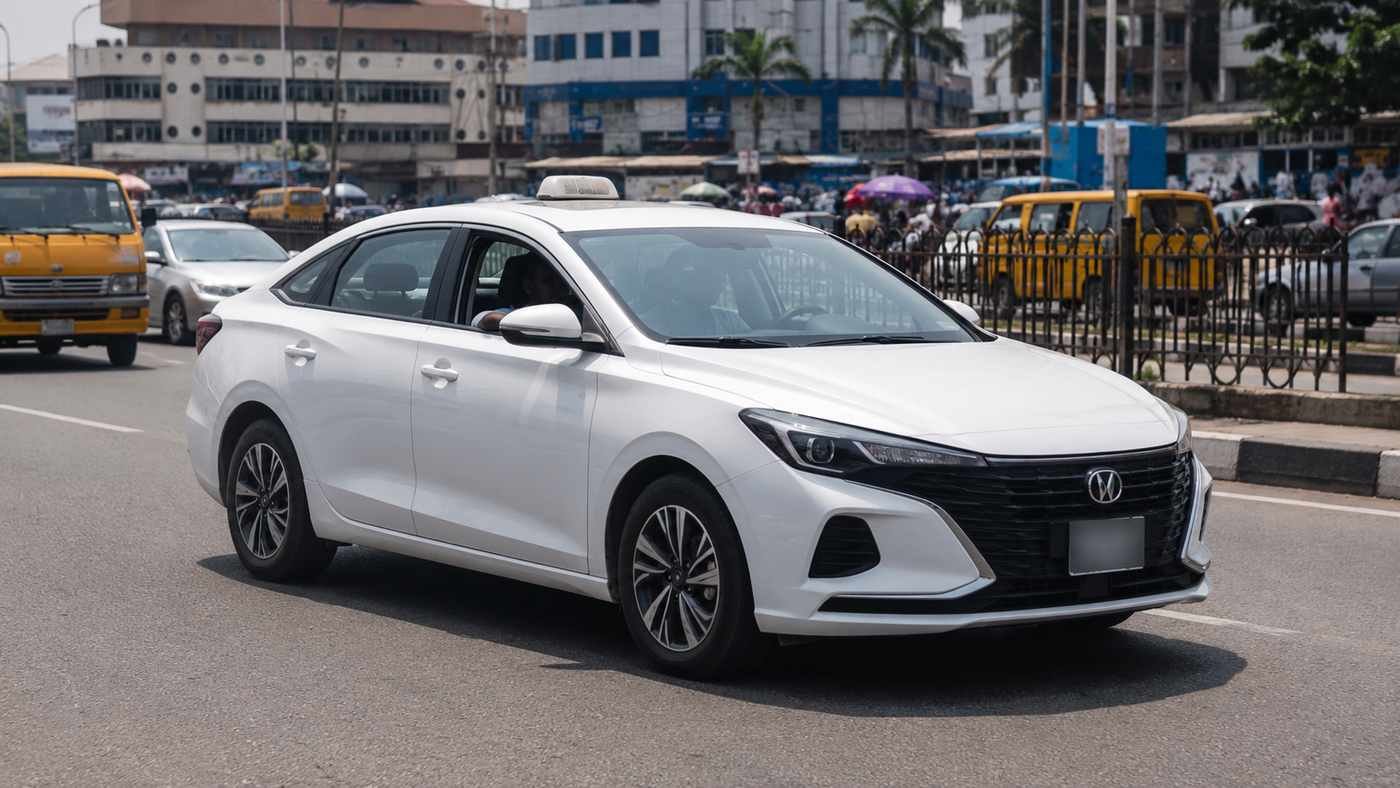
1. Changan EADO Plus (1.6L Petrol)
| Factor | Detail |
|---|---|
| Engine | 1.6L naturally aspirated petrol, ~128hp |
| Fuel consumption | ~6.5–7.2L/100km (combined) |
| Wheelbase | ~2,700mm — good rear legroom for passengers |
| Boot volume | ~470L — adequate for airport transfers |
| FOB price (Nansha, 2–3yr) | $8,000–$11,000 |
| Why for taxi | Best-value Chinese sedan for taxi use; fuel efficient; proven in Lagos and Accra; easy to maintain |
2. BYD Dolphin (Pure EV)
| Factor | Detail |
|---|---|
| Powertrain | Pure electric — 44.9 kWh or 60.4 kWh LFP Blade battery |
| Range (WLTP) | ~340–427 km — adequate for urban daily operation |
| Energy consumption | ~13–15 kWh/100km — ~$1.50–$2.50/100km vs $8–$12 for petrol |
| Wheelbase | ~2,700mm — comparable to petrol compact sedans |
| FOB price (Nansha, 1–2yr) | $12,000–$17,000 |
| Why for taxi | Lowest running cost per km; ideal for urban areas with charging access; BYD brand growing fast in Africa |
| Best market | Nairobi (corporate fleet); Lagos Lekki/VI; Accra; Johannesburg — urban with charging access |
EV for taxi: The economics of EV taxis are compelling in African cities where electricity cost is far below fuel cost. A BYD Dolphin costs approximately $1.50–$2.00 per 100km in electricity vs $8–$12 per 100km in petrol at current African fuel prices. Over 150,000km of taxi operation, this represents a saving of $9,000–$15,000 in fuel alone — more than recouping the higher purchase price vs a petrol alternative. The constraint is charging infrastructure: EVs currently work best for operators who can charge at home or at a dedicated depot overnight.
3. Changan Lamore / EADO EV (Electric Sedan)
| Factor | Detail |
|---|---|
| Powertrain | Pure electric — varies by model (EADO EV, Lamore) |
| Range (approx.) | ~400–500 km NEDC |
| FOB price (Nansha, 1–2yr) | $11,000–$16,000 |
| Why for taxi | Changan brand growing in Africa; EV economics with Changan service access in key markets |
| Best market | Lagos, Accra, Nairobi — urban fleet where Changan service centres exist |
Best Chinese Compact SUVs for Premium Taxi and Transfer Business
Compact and mid-size SUVs command higher fares in the African transport market — they are preferred for airport transfers, executive corporate transport, and premium ride-hailing tiers. Operators who invest in a SUV fleet can target a more profitable customer segment.
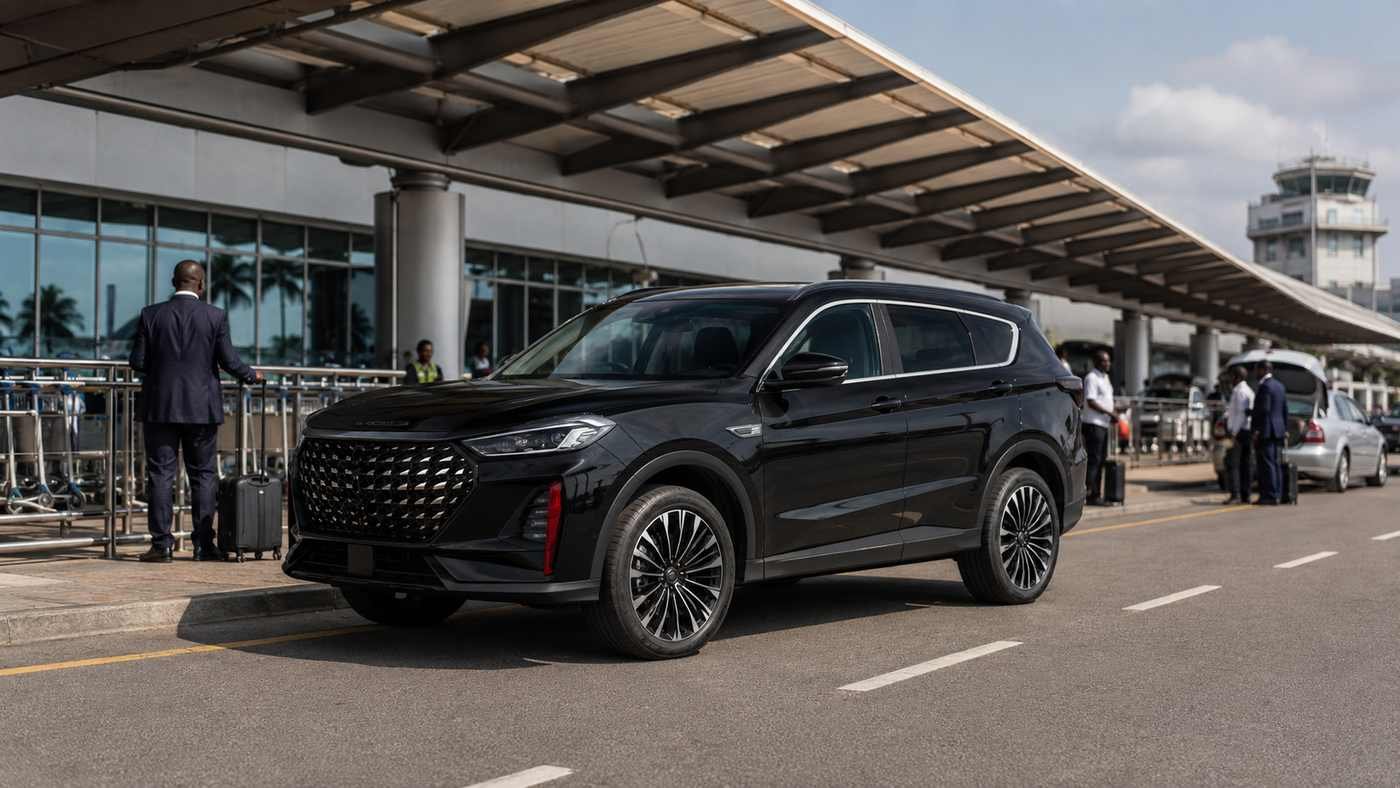
1. Changan CS55 Plus (1.5T)
| Factor | Detail |
|---|---|
| Engine | 1.5T turbocharged petrol, 177hp |
| Fuel consumption | ~7.0–7.8L/100km |
| Wheelbase | ~2,650mm |
| Boot volume | ~430L |
| FOB price (Nansha, 3–4yr) | $8,500–$12,000 |
| Why for transport | Entry SUV for premium taxi tier; panoramic roof impresses passengers; growing Changan service network |
2. Jetour X70 (1.5T)
| Factor | Detail |
|---|---|
| Engine | 1.5T turbocharged petrol, ~147hp |
| Fuel consumption | ~7.5–8.2L/100km |
| Wheelbase | ~2,710mm — good rear passenger space |
| Boot volume | ~450L |
| FOB price (Nansha, 3–4yr) | $9,000–$13,000 |
| Why for transport | Distinctive styling passengers notice; panoramic roof standard; growing brand appeal in Lagos and Accra |
3. BYD Atto3 (Pure EV SUV)
| Factor | Detail |
|---|---|
| Powertrain | Pure electric — 49.9 kWh or 60.5 kWh LFP Blade battery |
| Range (WLTP) | ~420–480 km |
| Energy consumption | ~15–17 kWh/100km — lowest running cost in SUV category |
| Wheelbase | ~2,720mm — good rear legroom |
| FOB price (Nansha, 1–2yr) | $15,000–$20,000 |
| Why for transport | Premium EV SUV for corporate transfer; official dealer in Kenya/SA/UAE/Saudi; BYD fastest-growing Chinese brand |
| Best market | Nairobi corporate fleet; South Africa Johannesburg executive; UAE, Saudi (official BYD dealer) |
Best Chinese 7-Seat Vehicles for Minibus and Group Transport
7-seat and larger vehicles serve a distinct transport business segment: shared taxis, airport shuttle services, school runs, corporate shuttle, and group hire. In many African cities, the 7-seat vehicle is the most commercially important category — it carries more passengers per driver and per vehicle cost.
| Model + Seating | Engine | FOB Price (Nansha) | Best Transport Use |
|---|---|---|---|
| Jetour X90 (3–4yr) — 5–7 seats | 1.6T petrol, ~197hp | $12,000–$16,000 | Airport transfer, corporate shuttle, premium group hire |
| Changan CS75 Plus 7-seat (3–4yr) | 1.5T petrol, 177hp | $11,000–$15,000 | Family shuttle, group hire, premium shared taxi |
| BYD Song Plus DM-i PHEV (1–2yr) | 1.5L petrol + electric (~80km EV range) | $18,000–$24,000 | Premium corporate shuttle; electric city, petrol highway |
| Haval H6 (3–4yr) | 1.5T petrol | $10,000–$14,000 | Mid-range transport SUV; established service network in many African markets |
Market-by-Market: Best Transport Business Vehicles by Country
Transport business requirements differ by market — drive side, road conditions, fuel type preferences, and regulatory requirements all affect which vehicle is the right choice:

| Market | Top Sedan Pick | Top SUV Pick | Key Consideration |
|---|---|---|---|
| Nigeria (Lagos/Abuja) | Changan EADO Plus (LHD, 3yr) — best value entry; BYD Dolphin for VI/Lekki EV operators | Changan CS55 Plus or Jetour X70 — premium tier; airport transfers | LHD direct fit; 15-yr age limit; Form M required; growing Changan/BYD service in Lagos |
| Ghana (Accra) | Changan EADO Plus (LHD, 3yr) — proven in Accra taxi market | Changan CS55 Plus — Accra premium ride-hailing | LHD direct fit; 10-yr age limit; simpler import than Nigeria |
| Kenya (Nairobi) | BYD Dolphin RHD (1–2yr) — Nairobi corporate fleet; official BYD dealer | BYD Atto3 RHD or Haval H6 RHD — premium transfer | RHD required; 8-yr age limit; PVoC certificate; BYD/Haval official Kenya |
| South Africa | BYD Dolphin RHD — EV economics suit SA solar+EV operators | BYD Atto3 RHD or Haval H6 RHD — Uber/Bolt premium tier | RHD required; SABS homologation; BYD/GWM Haval official SA |
| Tanzania/East Africa | Toyota Axio (RHD, Japan) still dominates — Chinese RHD sedan limited | Haval H6 RHD (growing) — limited Chinese SUV taxi use | RHD required; Toyota dominance; Chinese cars gaining slowly |
| Francophone West Africa | Changan EADO Plus (LHD) — French-speaking market familiar with compact sedans | Changan CS55 or Geely Coolray (LHD) | LHD fits; compact sedan format familiar to buyers |
Cost Per Kilometre: Chinese vs Japanese for African Taxi Operators
The most important number for any transport operator is cost per kilometre — not purchase price. Here is a realistic comparison over 150,000km of typical African urban operation:
| Cost Factor | Toyota Corolla (7yr, Japan) | Changan EADO Plus (3yr, China) | BYD Dolphin EV (2yr, China) |
|---|---|---|---|
| Purchase price (landed, Lagos) | ~$14,000–$18,000 | ~$17,000–$20,000 | ~$22,000–$26,000 |
| Fuel/energy per 100km | ~$10–$13 (petrol) | ~$8–$10 (efficient engine) | ~$1.50–$2.50 (electricity) |
| Estimated fuel over 150,000km | $15,000–$19,500 | $12,000–$15,000 | $2,250–$3,750 |
| Maintenance (150,000km) | $3,000–$5,000 | $2,500–$4,000 | $1,500–$2,500 (fewer moving parts) |
| Total operating cost | $32,000–$42,500 | $31,500–$39,000 | $25,750–$32,250 |
| Resale value after 150,000km | $4,000–$7,000 (strong residual) | $3,000–$6,000 | $4,000–$8,000 (improving) |
| Net total cost of ownership | $25,000–$35,500 | $25,500–$33,000 | $17,750–$24,250 |
Key takeaway: On total cost of ownership over 150,000km, the BYD Dolphin EV is the lowest-cost vehicle for urban African taxi use — by a significant margin — in markets with reliable electricity. The Changan EADO Plus is comparable to a used Toyota Corolla on total cost while offering newer specification. The Japanese Corolla retains higher resale value, which partially offsets the EV’s running cost advantage in markets without charging infrastructure.
Ordering Chinese Vehicles for Your Transport Fleet: Key Considerations
- Order consistent spec: for a taxi fleet, consistency matters. Order all vehicles in the same colour (white is standard in most African markets), same trim level, and same engine. Mixed specs create maintenance complexity.
- Volume pricing: ordering 5+ units of the same model typically unlocks better FOB pricing. Discuss volume discounts with your supplier before committing to a single unit.
- Spares with your order: include a basic spares kit in your container — air filters, oil filters, brake pads — especially for models where local sourcing is still developing. One container can include 4 vehicles plus a small box of spares.
- Service network check: before ordering, confirm there is at least one service centre or mechanic familiar with your chosen brand in your city. For Changan in Lagos, this is straightforward. For less common brands, confirm before ordering.
- Financing consideration: Chinese vehicles have lower purchase prices than comparable Japanese alternatives, which improves financing accessibility. A transport operator financing at a Nigerian microfinance rate will service a lower monthly payment on a $17,000 Chinese sedan vs a $22,000 Japanese equivalent.
Related guides: For full import process guides by destination market, see our Nigeria import guide, Kenya import guide, Ghana import guide, and South Africa import guide. For BYD model details, see our BYD export guide.
Conclusion: The Right Chinese Vehicle for Your Transport Business
Chinese vehicles have fundamentally changed the economics of the transport business in Africa. The BYD Dolphin EV delivers the lowest cost per kilometre of any vehicle currently available for the African taxi market — in cities with adequate charging infrastructure. The Changan EADO Plus matches the total cost of ownership of a used Toyota Corolla while offering newer technology and better passenger experience. The Jetour X70 and BYD Atto3 SUVs open the premium transfer market to operators who previously could not afford an equivalent Japanese alternative.
The right vehicle depends on your specific market, your operating model (owner-operator vs fleet), your access to maintenance infrastructure, and whether charging is viable for your operation. Use the market-by-market guide above as a starting point, then contact us with your specific requirements — we will provide a stock list with landed cost estimates for your chosen model and destination.
Browse our current ready stock inventory for available compact sedans and SUVs suitable for transport business use, or contact us on WhatsApp with your fleet requirement.